








SAP ABAP
 August 30, 2026
This document provides a complete practical example of implementing Business Object (BO) Actions in SAP ABAP RAP and improving the implementation using the State and Factory Design Patterns. The document is divided into two parts. Part 1 covers the initial RAP Business Object implementation, including the database table, CDS view, behavior definition, and behavior implementation
- June 8, 2026
Modern enterprise applications demand more than functionality—they require scalability, maintainability, flexibility, and a clean architectural foundation. The ABAP RESTful Application Programming Model (RAP) delivers exactly that through its structured, service-oriented, multi-layered architecture. At its core, RAP transforms business data into intelligent services by clearly separating data models, business behavior, and service exposure. 🔹 Foundation Layer
- June 3, 2026
Modern SAP development demands speed, collaboration, automation, and consistency. The integration of abapGit and Git-enabled Change and Transport System (gCTS) is transforming the way SAP ABAP teams manage source code, transports, and deployment pipelines. By combining the flexibility of Git-based version control with SAP’s native transport management capabilities, organizations can adopt DevOps practices while maintaining
- June 3, 2026
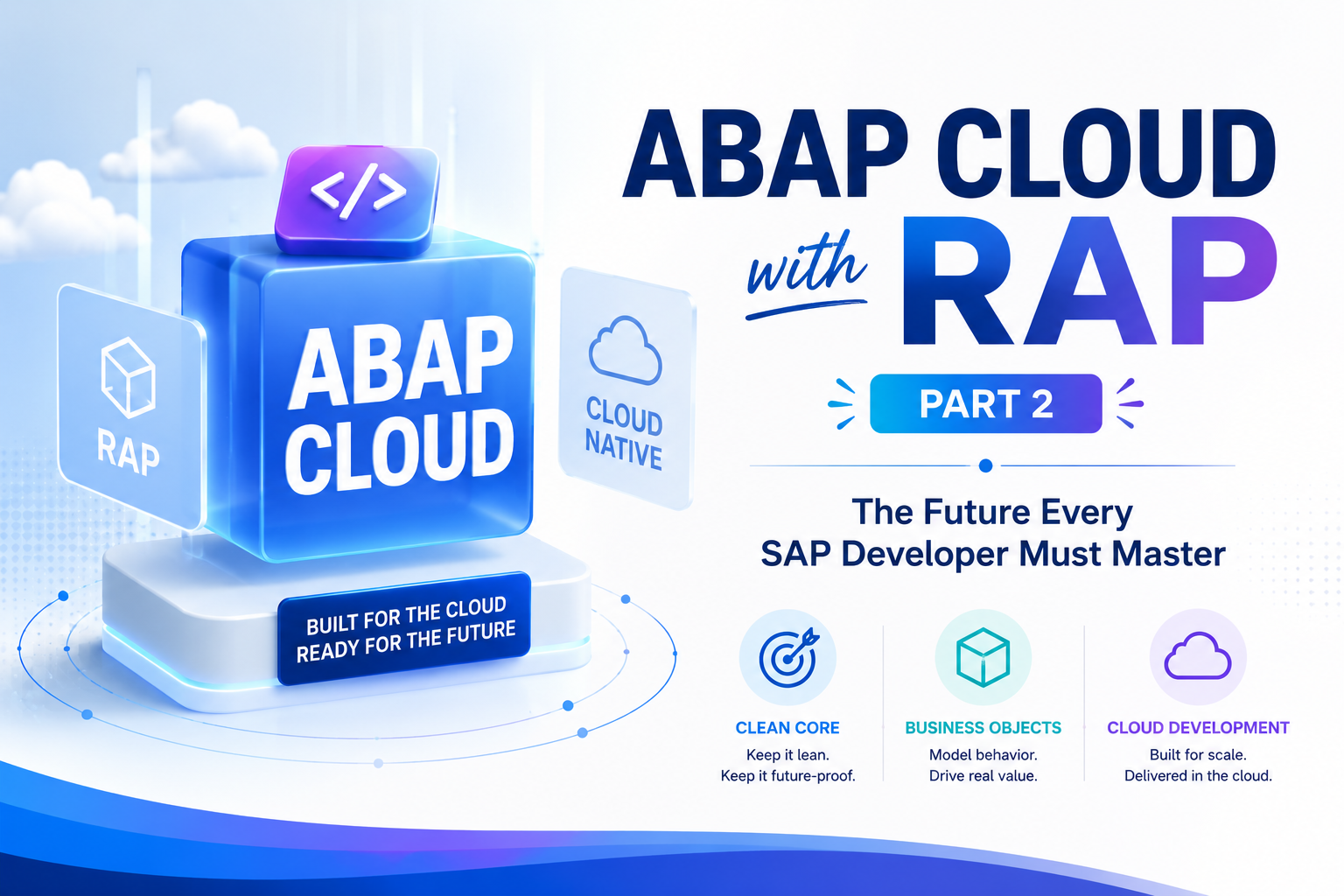
The SAP development ecosystem is undergoing one of its most significant transformations since the introduction of ABAP Objects and SAP HANA. As organizations embrace cloud-first strategies and clean-core principles, SAP is redefining how enterprise applications are built, extended, and maintained. At the center of this transformation are two strategic technologies: ABAP Cloud and the ABAP
- June 3, 2026
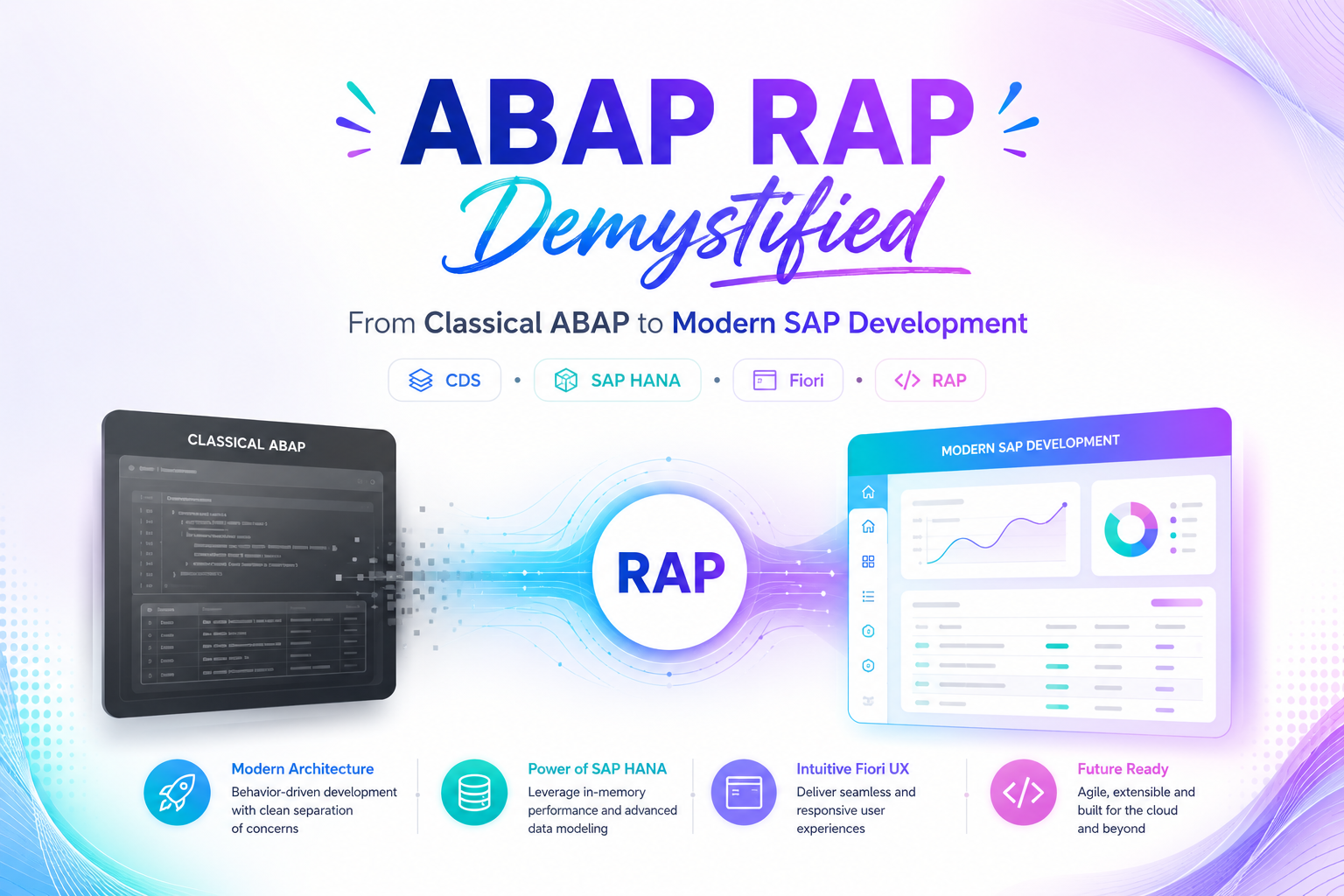
The SAP development landscape has undergone a remarkable transformation over the past decade. What once revolved around classical ABAP programming, Dynpro screens, and custom reports has evolved into a modern, cloud-ready development paradigm powered by SAP HANA, CDS Views, SAP Fiori, and the ABAP RESTful Application Programming Model (RAP). For many ABAP developers, RAP can
- June 3, 2026
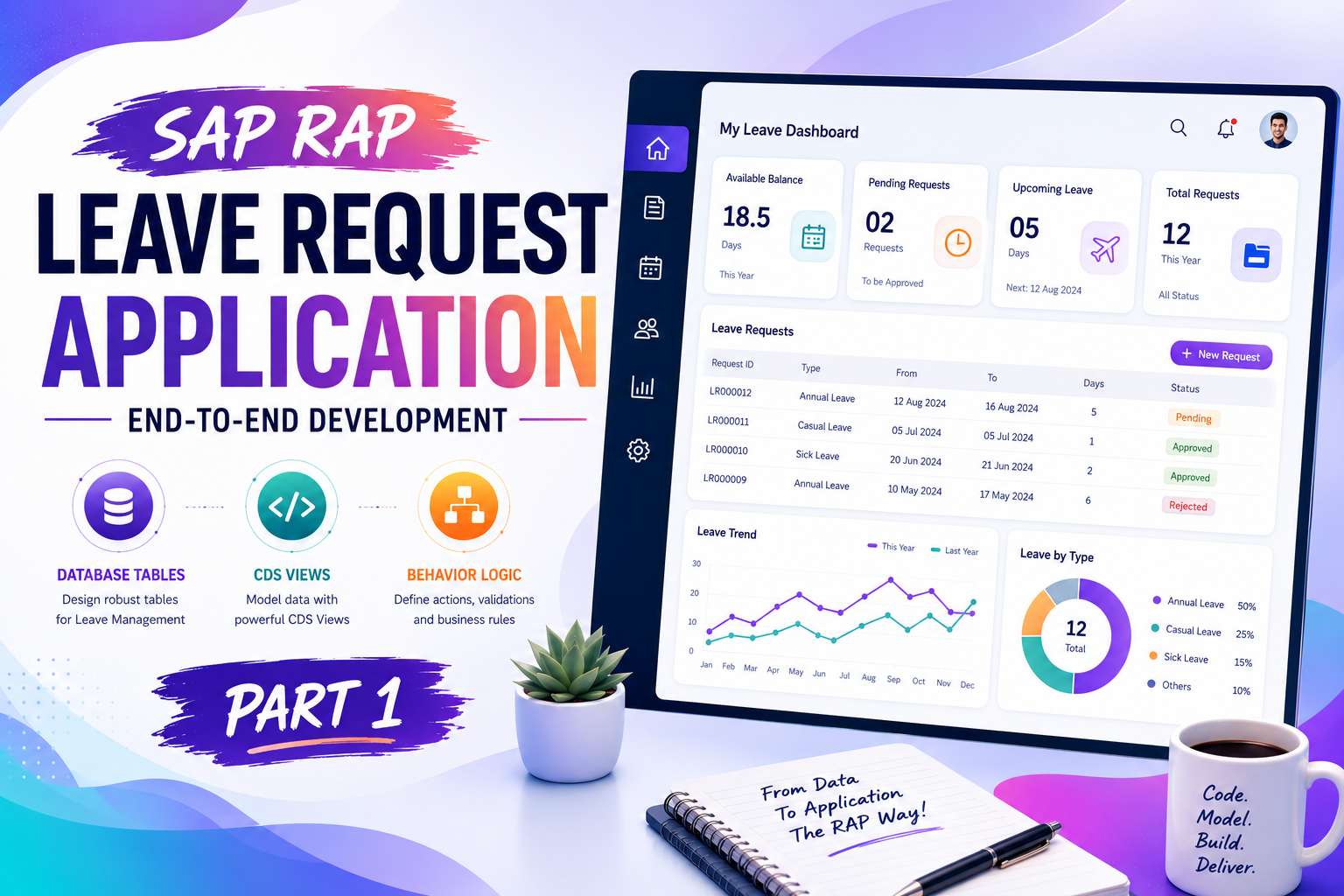
Leave management is one of the most common business processes across organizations, yet many companies continue to rely on fragmented systems, spreadsheets, and manual approval workflows. Modern enterprises require intelligent, scalable, and user-friendly applications that simplify leave request management while ensuring compliance with organizational policies. In this first part of our SAP RAP End-to-End Leave
- June 1, 2026
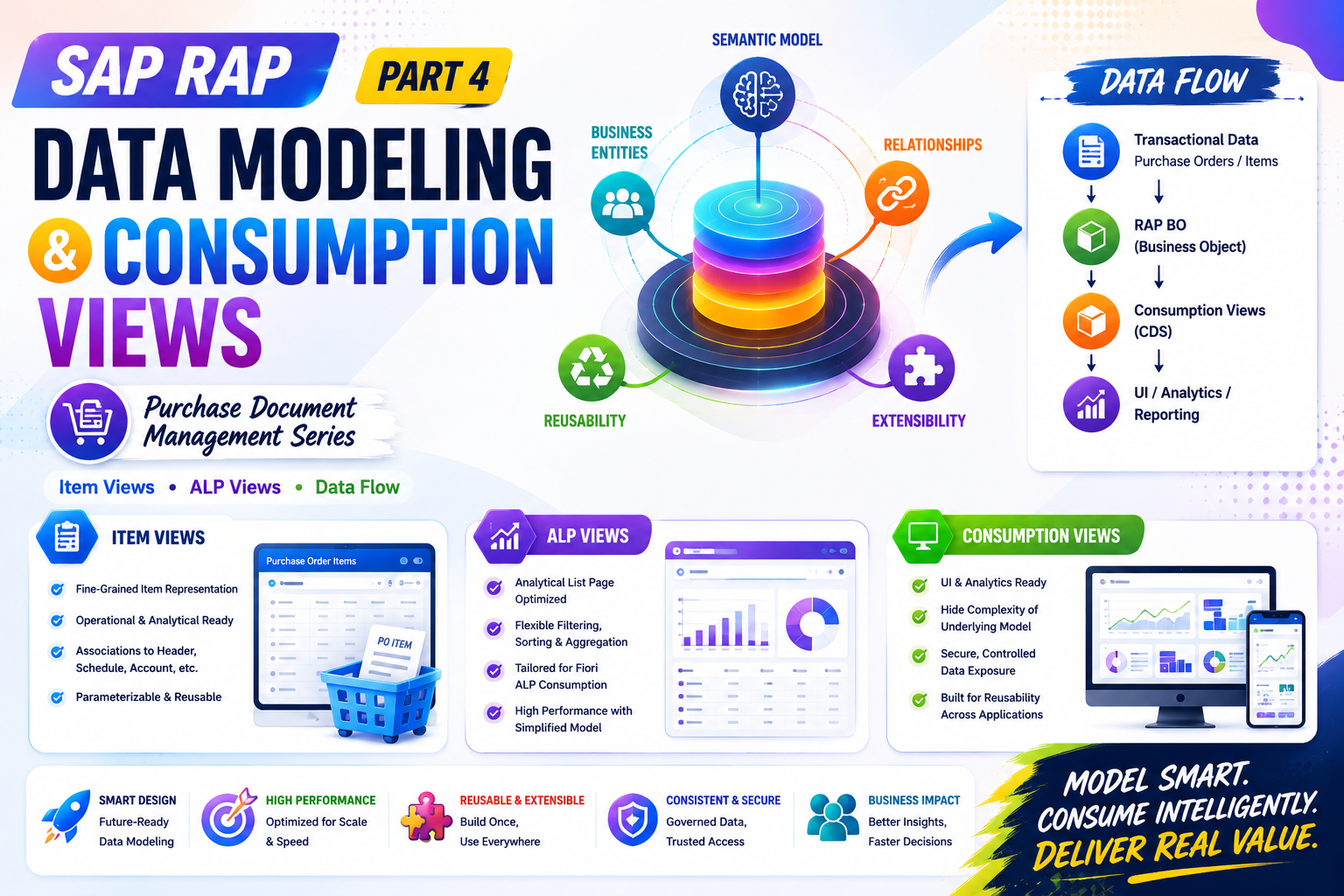
As our SAP RAP Purchase Document Management application continues to evolve, we now move beyond foundational CDS View architecture and focus on one of the most important aspects of enterprise application development: delivering business-ready data to end users. In Part 4 of this series, we explore how consumption views serve as the bridge between backend
- June 1, 2026
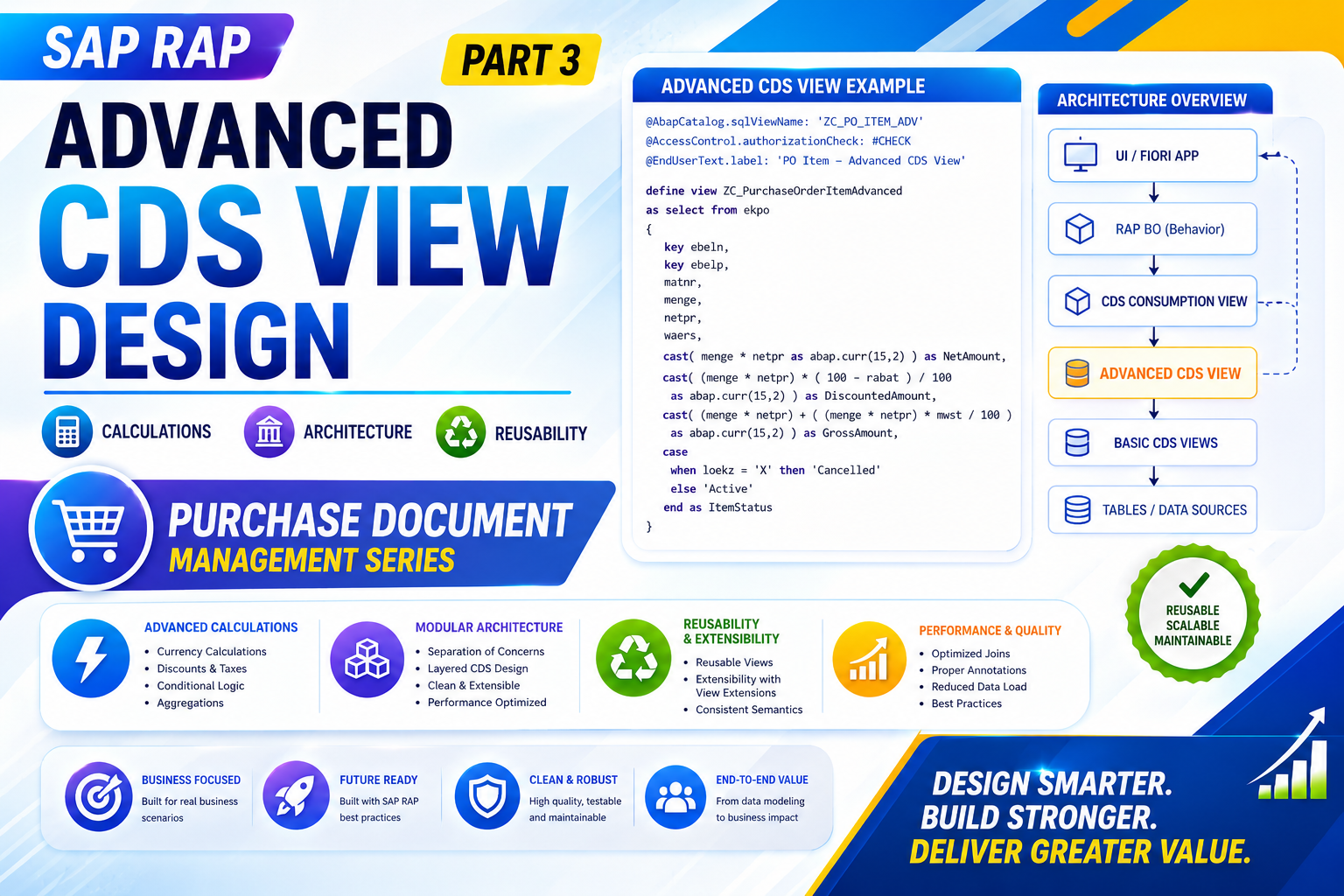
As enterprise applications evolve, the quality of their data model becomes one of the most critical factors influencing maintainability, scalability, and performance. In Part 3 of the SAP RAP Purchase Document Management Series, we shift our focus from testing and validation to the architectural principles that drive effective CDS View design. Core Data Services (CDS)
- May 31, 2026
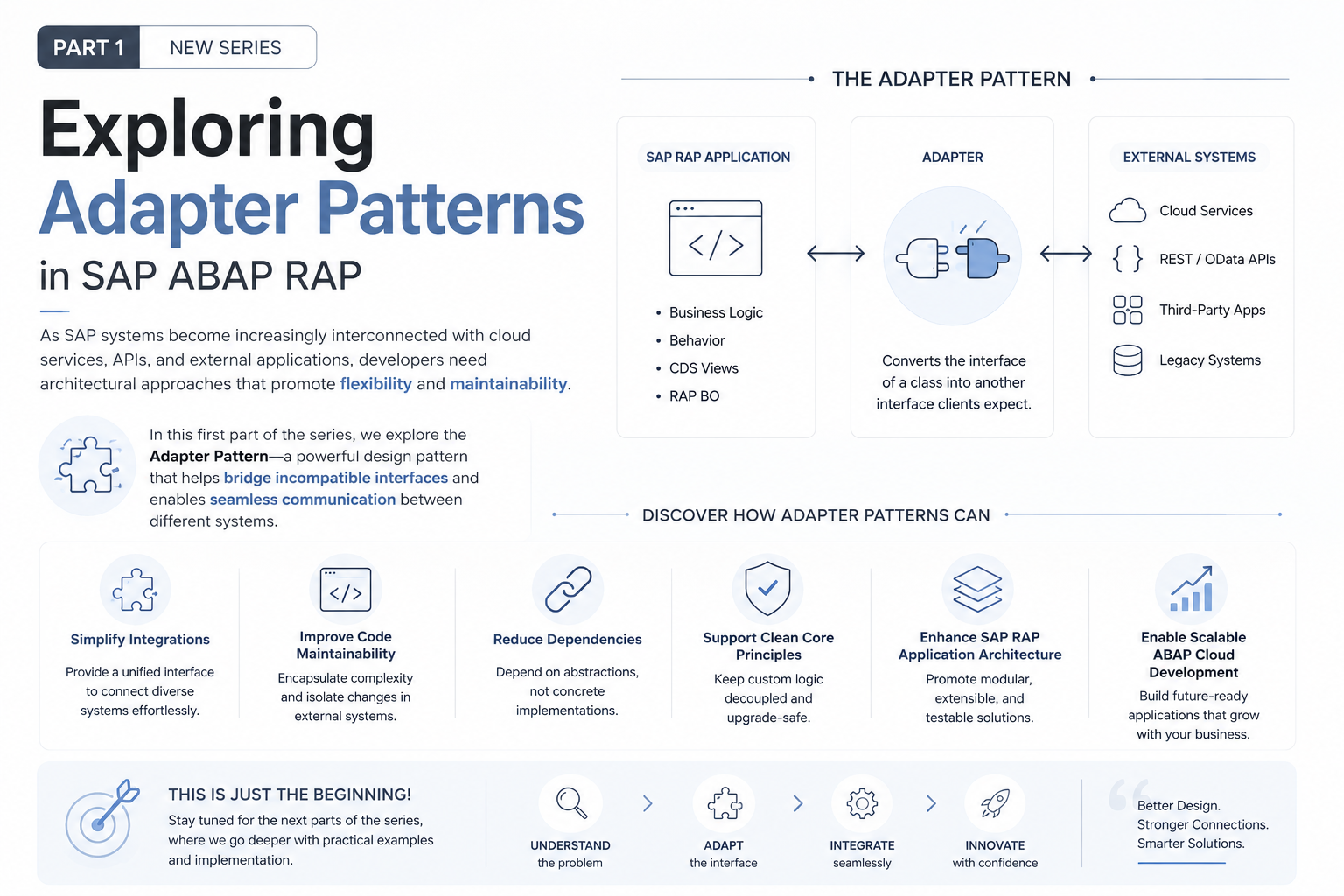
Modern SAP applications rarely operate in isolation. They constantly interact with external systems, legacy applications, APIs, cloud services, and various business components. As organizations embrace SAP RAP and ABAP Cloud, designing applications that are flexible, maintainable, and easy to extend has become more important than ever. In Part 1 of this series, we explore one
- May 31, 2026
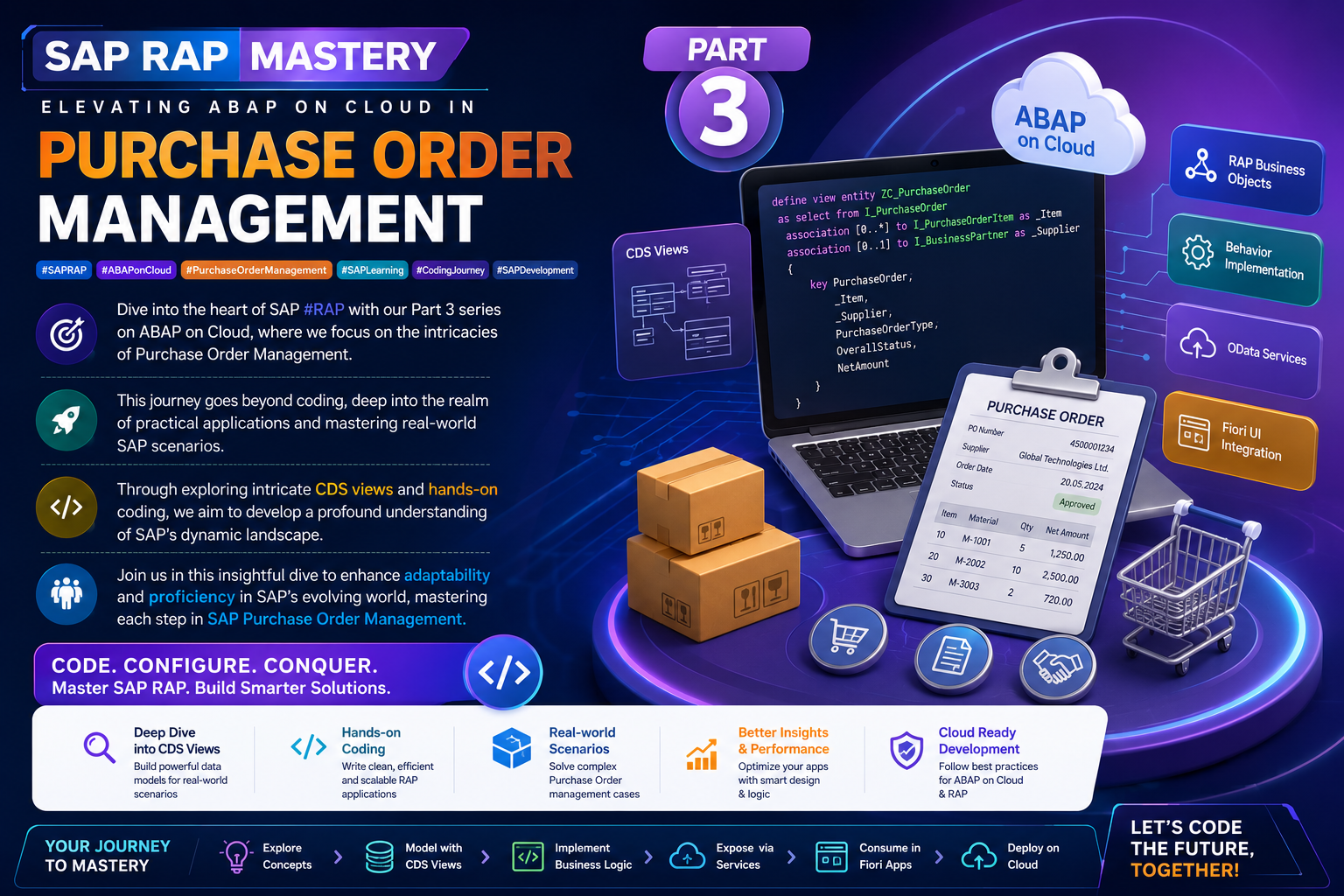
Welcome to Day 3 of our SAP RAP Purchase Order Management journey! As we continue transforming business requirements into a modern cloud-ready application, today’s focus shifts to one of the most important building blocks of SAP RAP architecture—the CDS Root View Entity. In SAP RAP, the Root View Entity serves as the central business object


- 1
- 2