












 June 3, 2026
The SAP development ecosystem is undergoing one of its most significant transformations since the introduction of ABAP Objects and SAP HANA. As organizations embrace cloud-first strategies and clean-core principles, SAP is redefining how enterprise applications are built, extended, and maintained.
At the center of this transformation are two strategic technologies: ABAP Cloud and the ABAP RESTful Application Programming Model (RAP).
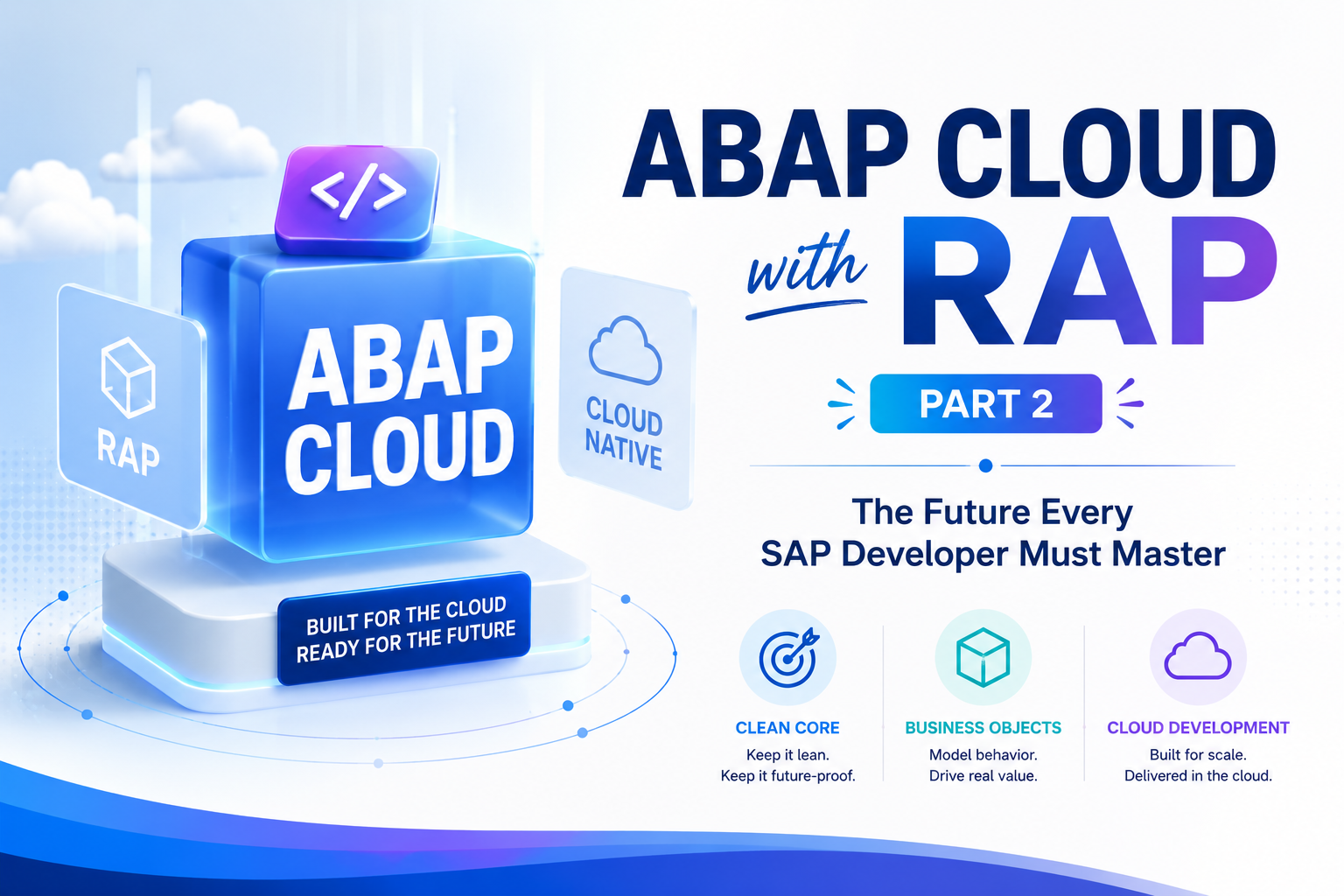
In Part 2 of this learning journey, we dive deeper into the ABAP Cloud Development Model and explore why it has become the recommended approach for building future-ready SAP applications.
Unlike traditional development approaches that often relied on direct modifications and tightly coupled customizations, ABAP Cloud introduces a structured, lifecycle-stable framework that promotes upgrade safety, extensibility, maintainability, and cloud compatibility.
This article explores the key architectural principles behind ABAP Cloud, including the separation of concerns through the Data Layer, Domain-Specific Implementations, Business Service Exposure, and Service Consumption layers.
We also examine how RAP Business Objects provide a unified programming model that simplifies transactional application development while enabling seamless integration with SAP Fiori, OData services, and cloud-native architectures.
For developers transitioning from classical ABAP development, understanding ABAP Cloud is no longer optional—it is becoming an essential skill for building modern SAP solutions across SAP S/4HANA, SAP BTP ABAP Environment, and future SAP platforms.
Through practical explanations and architectural insights, readers will gain a clear understanding of how ABAP Cloud combines familiar ABAP strengths with modern cloud development principles to deliver scalable, secure, and upgrade-friendly enterprise applications.
Topics Covered
1. Introduction to ABAP Cloud
- What is ABAP Cloud?
- Why SAP Introduced ABAP Cloud
- Cloud-Ready Development Principles
- Clean Core Strategy
2. Why ABAP Cloud Matters
- Future-Proof SAP Skills
- Upgrade-Safe Development
- Reduced Technical Debt
- Faster Innovation Cycles
3. Core Strengths of ABAP Cloud
- Proven ABAP Concepts
- Modern Development Practices
- Lifecycle Stability
- Enterprise Scalability
4. Key Components of ABAP Cloud
Data Layer
- CDS Views
- Data Modeling
- Semantic Data Definitions
Domain-Specific Implementation
- Business Logic Layer
- RAP Behavior Definitions
- Validation Frameworks
Business Service Exposure
- OData Services
- Service Definitions
- Service Bindings
Business Service Consumption
- SAP Fiori Integration
- External API Consumption
- Cloud Services
5. RAP Business Objects
- What is a RAP Business Object?
- Business Object Architecture
- Root Entities
- Child Entities
- Associations and Compositions
6. RAP Behavior Model
- Behavior Definitions
- Managed vs Unmanaged RAP
- Transaction Processing
- Business Rules
7. Lifecycle Management
- Upgrade Stability
- Cloud Operations
- Continuous Innovation
- Extensibility Concepts
8. Tools in ABAP Cloud
- ABAP Development Tools (ADT)
- Eclipse-Based Development
- SAP BTP ABAP Environment
- Modern Development Tooling
9. ABAP Cloud vs Classical ABAP
Classical ABAP
✔ On-Premise Focus
✔ Custom Modifications
✔ Legacy Development Patterns
ABAP Cloud
✔ Cloud-Ready
✔ Upgrade Safe
✔ Clean Core Compliant
✔ Extensible Architecture
✔ Future SAP Standard
10. Preparing for the Future
- SAP S/4HANA Public Cloud
- SAP BTP Development
- Side-by-Side Extensions
- Intelligent Enterprise Applications
Key Takeaways
✔ Understand the ABAP Cloud development model
✔ Learn the architecture behind RAP Business Objects
✔ Explore lifecycle-stable extensibility
✔ Understand SAP’s Clean Core strategy
✔ Discover cloud-ready development practices
✔ Prepare for the future of SAP application development
https://drive.google.com/file/d/12LLAbbbgrQh4bi91iY5FesVamj-mpElD/view?usp=sharing




 Prev Post
What do you think?
Show comments / Leave a comment