










 June 3, 2026
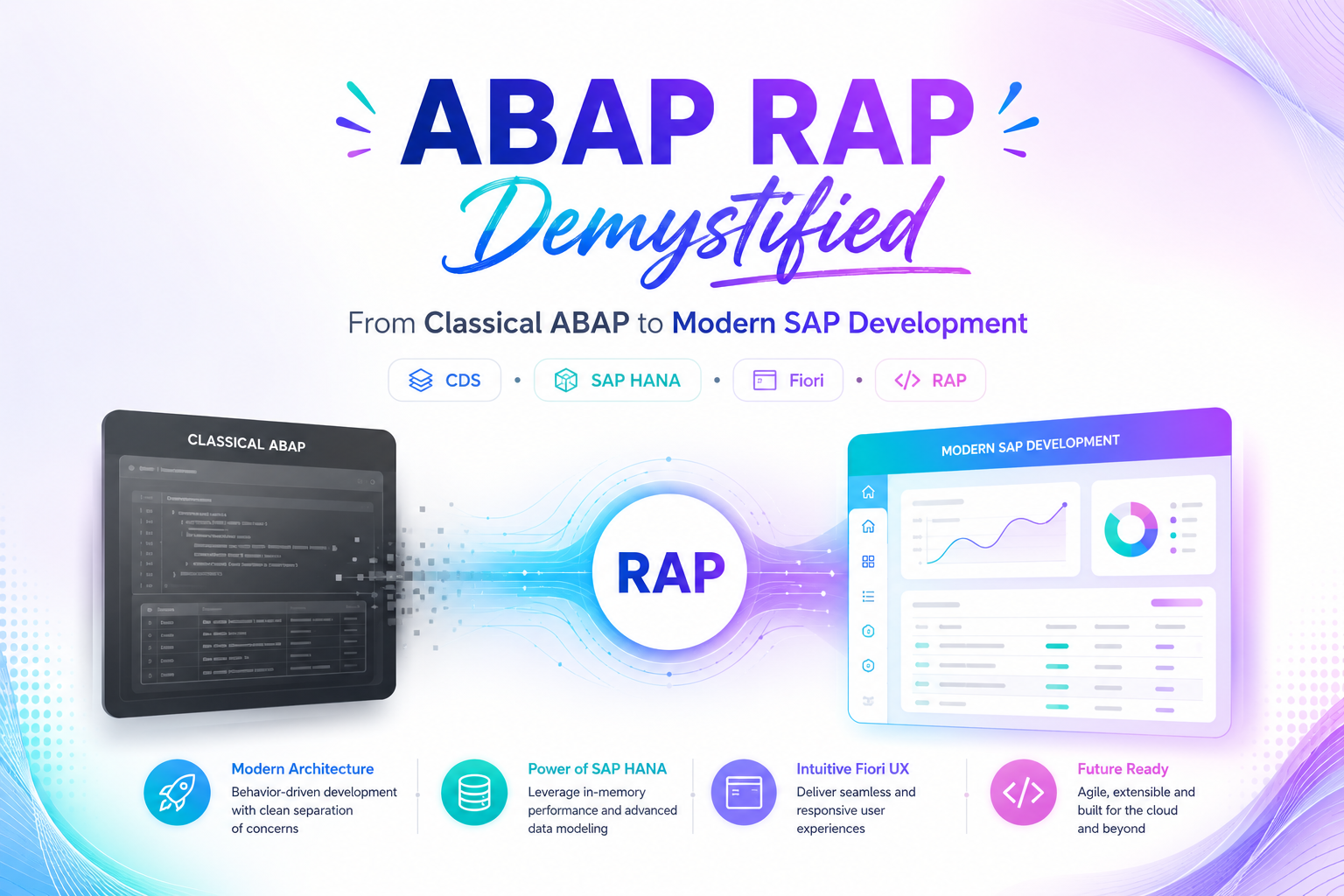
The SAP development landscape has undergone a remarkable transformation over the past decade. What once revolved around classical ABAP programming, Dynpro screens, and custom reports has evolved into a modern, cloud-ready development paradigm powered by SAP HANA, CDS Views, SAP Fiori, and the ABAP RESTful Application Programming Model (RAP).
For many ABAP developers, RAP can initially appear complex due to the number of concepts and technologies involved. However, RAP is not a completely new technology—it is the natural evolution of SAP application development, bringing together years of innovation into a unified programming model.
This article provides a comprehensive overview of the technologies, architectural changes, and development principles that led to RAP becoming SAP’s strategic framework for building enterprise applications.
We begin by exploring the foundations of classical ABAP programming and examine how SAP HANA fundamentally changed the way applications are designed and optimized. The introduction of Code Pushdown, Core Data Services (CDS), and business object frameworks paved the way for metadata-driven development and modern user experiences.
The guide also explains the role of BOPF (Business Object Processing Framework), SAP Gateway, OData services, and SAP Fiori in shaping the RAP architecture that developers use today.
By understanding this evolution, developers can better appreciate RAP’s design philosophy and confidently transition from traditional ABAP development to cloud-ready enterprise application development.
Topics Covered
1. Introduction to SAP RAP
- What is RAP?
- Why SAP Introduced RAP
- RAP Architecture Overview
- Benefits of RAP Development
2. Layers of RAP
- Persistence Layer
- CDS Data Model Layer
- Behavior Layer
- Service Layer
- SAP Fiori Consumption Layer
3. RAP Development Scenarios
- Managed RAP
- Unmanaged RAP
- Draft Applications
- Transactional Applications
- Analytical Applications
4. Applications You Can Build with RAP
- Employee Management
- Purchase Order Management
- Leave Management
- Material Management
- Custom Business Applications
- SAP Fiori Applications
5. Technologies Behind RAP
- CDS Views
- Behavior Definitions
- OData V4 Services
- SAP Fiori Elements
- ABAP Cloud
6. Evolution of ABAP Programming
Classical ABAP Era
- Reports
- Module Pool Programming
- Dynpro Screens
- Table Maintenance Generator (SM30)
SAP HANA Revolution
- In-Memory Computing
- Code Pushdown
- Performance Optimization
CDS View Introduction
- Semantic Data Modeling
- Reusable Data Models
- Virtual Data Layer
SAP Fiori Era
- User Experience Transformation
- Responsive Applications
- Role-Based Design
RAP Era
- Unified Programming Model
- Cloud-Ready Development
- Enterprise Application Framework
7. CDS Views Explained
- What are CDS Views?
- Why SAP Introduced CDS
- CDS Benefits
- CDS vs Traditional SQL
- CDS Annotations
8. BOPF and RAP
- What is BOPF?
- Business Object Framework Concepts
- Relationship Between BOPF and RAP
- Evolution Toward RAP
9. Application Server ABAP (AS ABAP)
- SAP Application Server Architecture
- ABAP Runtime Environment
- Role in Modern Development
- Integration with RAP
10. Classical ABAP vs RAP
Classical ABAP
✔ Custom Screens
✔ Reports
✔ Procedural Development
✔ On-Premise Focus
RAP
✔ SAP Fiori Ready
✔ OData Services
✔ Cloud Ready
✔ Metadata-Driven Development
✔ Enterprise Scalability
Key Takeaways
✔ Understand how RAP evolved from classical ABAP
✔ Learn the role of SAP HANA in modern development
✔ Understand CDS Views and semantic data modeling
✔ Explore BOPF and business object architecture
✔ Discover how SAP Fiori and RAP work together
✔ Build a strong foundation for RAP learning
https://drive.google.com/file/d/11jTB1dzuQiP9iw1mMxKl8cnBwiO_aY4W/view?usp=sharing




 Prev Post
What do you think?
Show comments / Leave a comment