








Archive for June, 2026
 June 3, 2026
Artificial Intelligence (AI) has evolved from a theoretical concept into one of the most transformative technologies of the modern era. Beginning with Alan Turing’s groundbreaking ideas in the 1950s, AI progressed through rule-based systems, expert systems, machine learning, and deep learning innovations. Milestones such as Deep Blue defeating a chess champion and IBM Watson excelling
- June 3, 2026
Data is one of the most valuable assets in modern enterprises—but its true value can only be realized when it is connected, trusted, and accessible. As a core component of SAP Business Data Cloud, SAP Datasphere empowers organizations to unify data across SAP and non-SAP systems while maintaining business context, governance, and security. With powerful
- June 3, 2026
SAP’s journey over the last five decades is a remarkable story of continuous innovation and transformation. It began in the 1970s with SAP R/1, a groundbreaking solution that automated business processes and introduced a new way of managing enterprise data. This foundation evolved into SAP R/2, enabling integrated business operations on mainframe systems, and later
- June 3, 2026
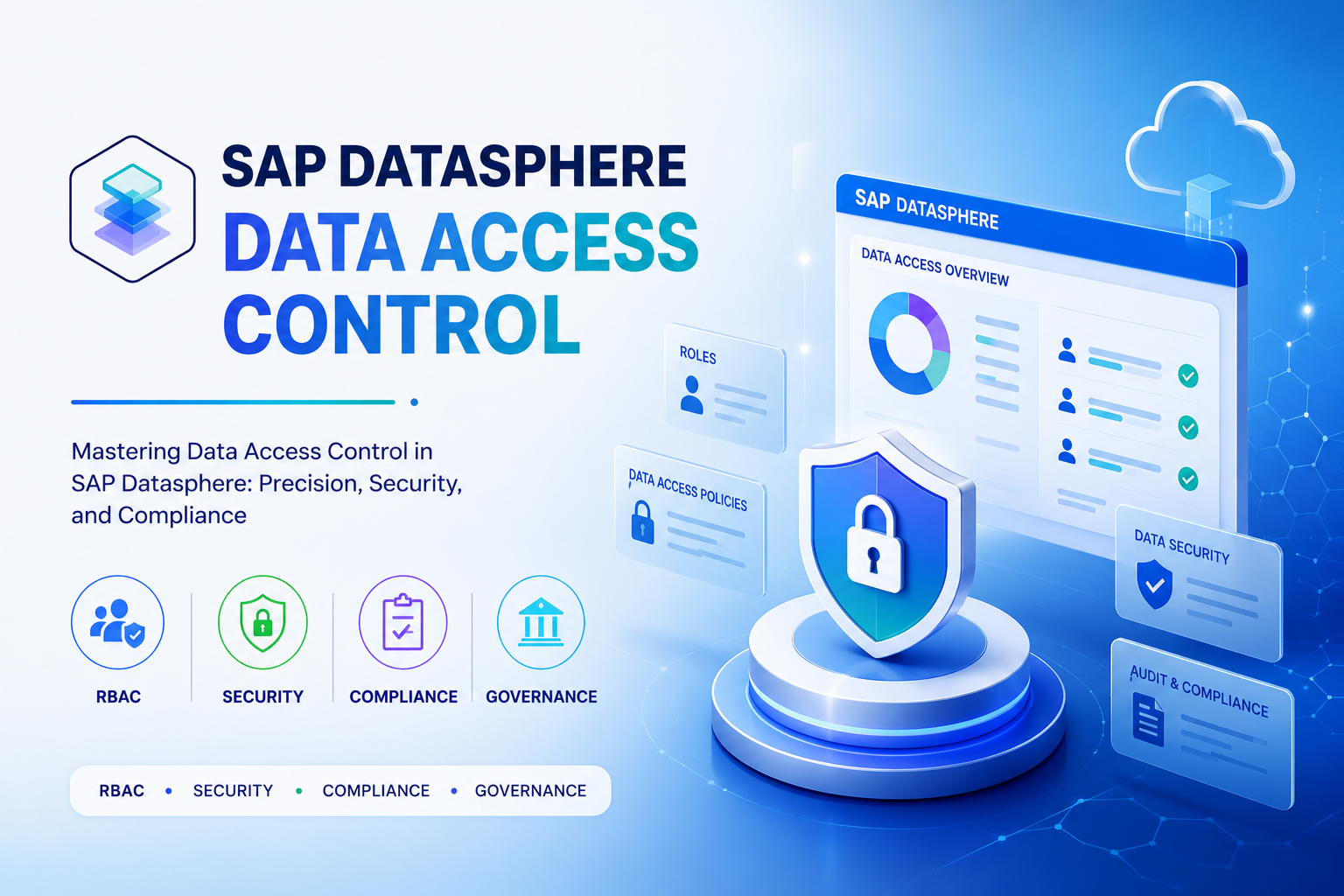
In today’s data-driven world, securing business data is more important than ever. SAP Datasphere provides powerful Data Access Control (DAC) capabilities to ensure that the right users have access to the right data—while maintaining security, governance, and compliance. Key security features include: ✅ Role-Based Access Control (RBAC) for managing permissions through global and space-level roles
- June 3, 2026
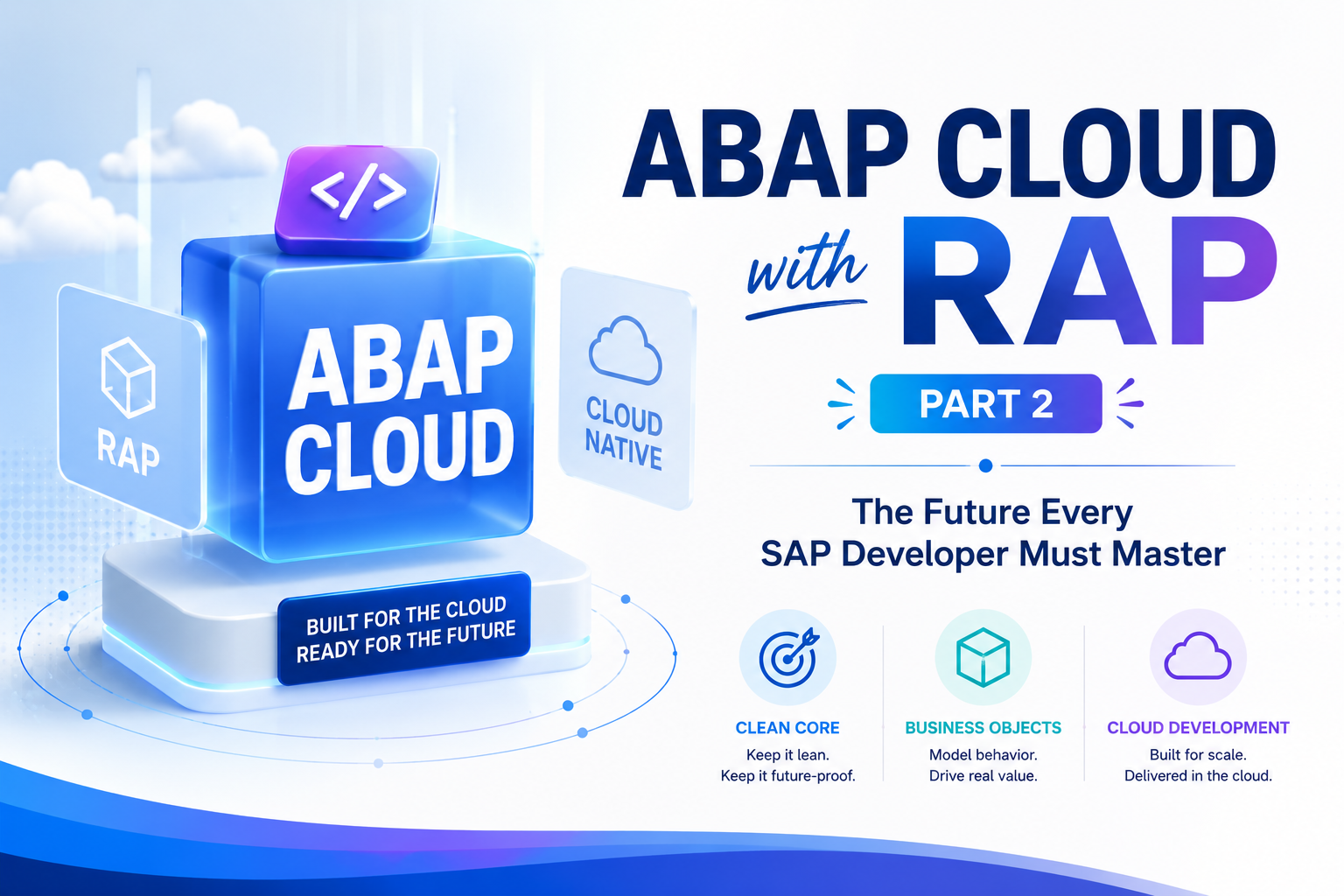
The SAP development ecosystem is undergoing one of its most significant transformations since the introduction of ABAP Objects and SAP HANA. As organizations embrace cloud-first strategies and clean-core principles, SAP is redefining how enterprise applications are built, extended, and maintained. At the center of this transformation are two strategic technologies: ABAP Cloud and the ABAP
- June 3, 2026
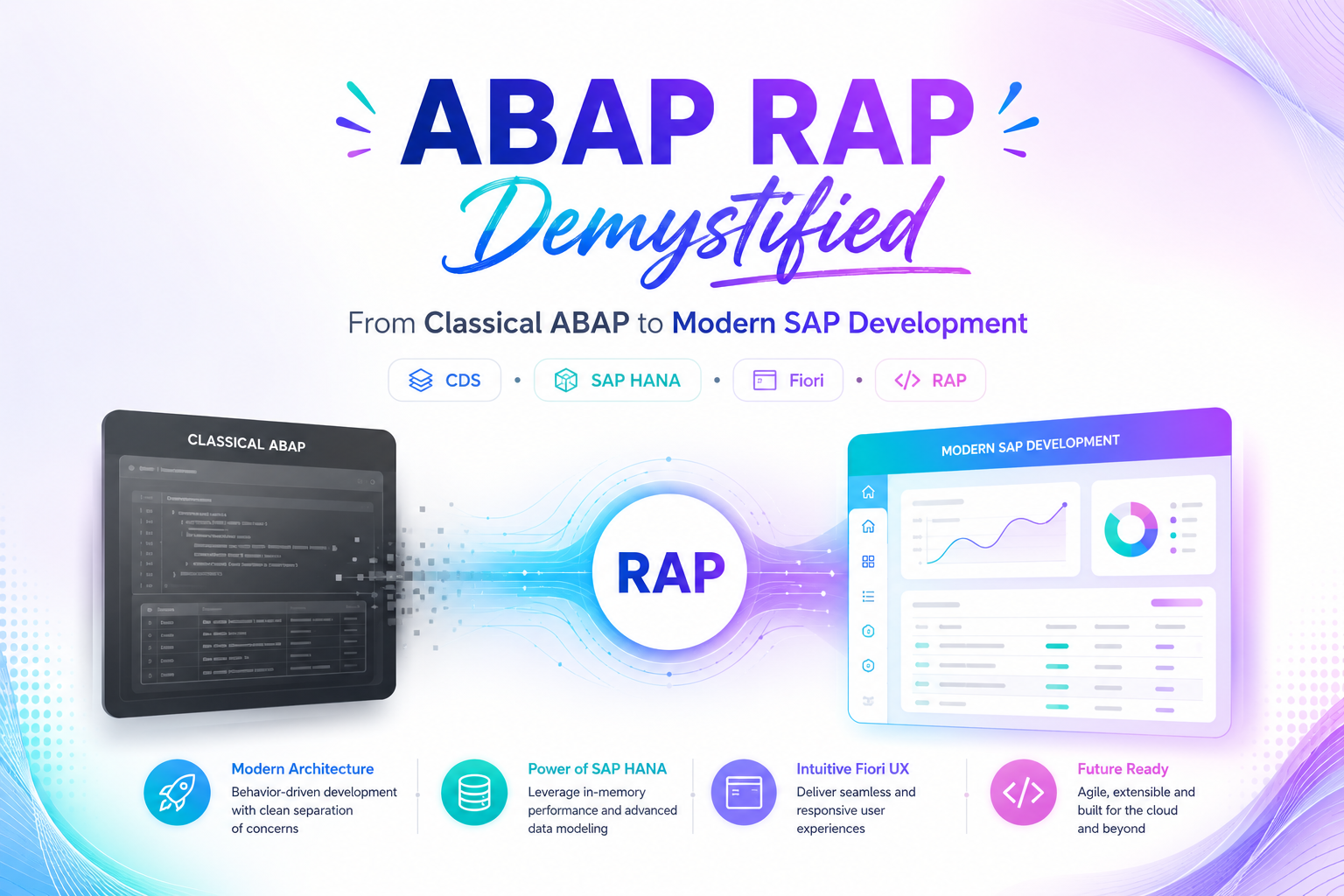
The SAP development landscape has undergone a remarkable transformation over the past decade. What once revolved around classical ABAP programming, Dynpro screens, and custom reports has evolved into a modern, cloud-ready development paradigm powered by SAP HANA, CDS Views, SAP Fiori, and the ABAP RESTful Application Programming Model (RAP). For many ABAP developers, RAP can
- June 3, 2026
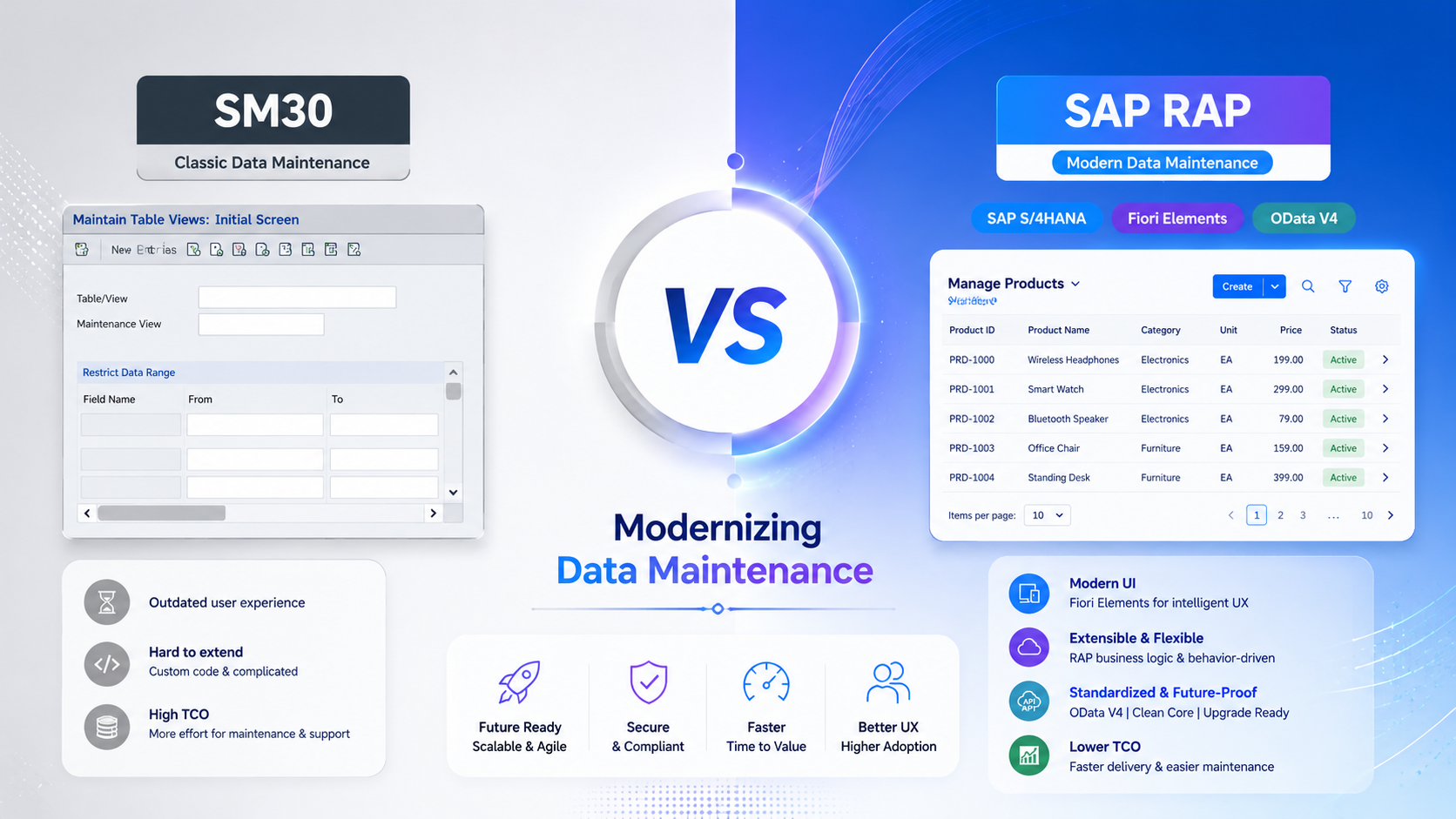
For decades, transaction SM30 has been the go-to tool for maintaining custom configuration and master data within SAP systems. While SM30 remains effective for basic table maintenance, modern business applications require significantly more than simple CRUD operations. Today’s SAP users expect responsive SAP Fiori applications, business validations, draft handling, role-based security, value helps, search capabilities,
- June 3, 2026
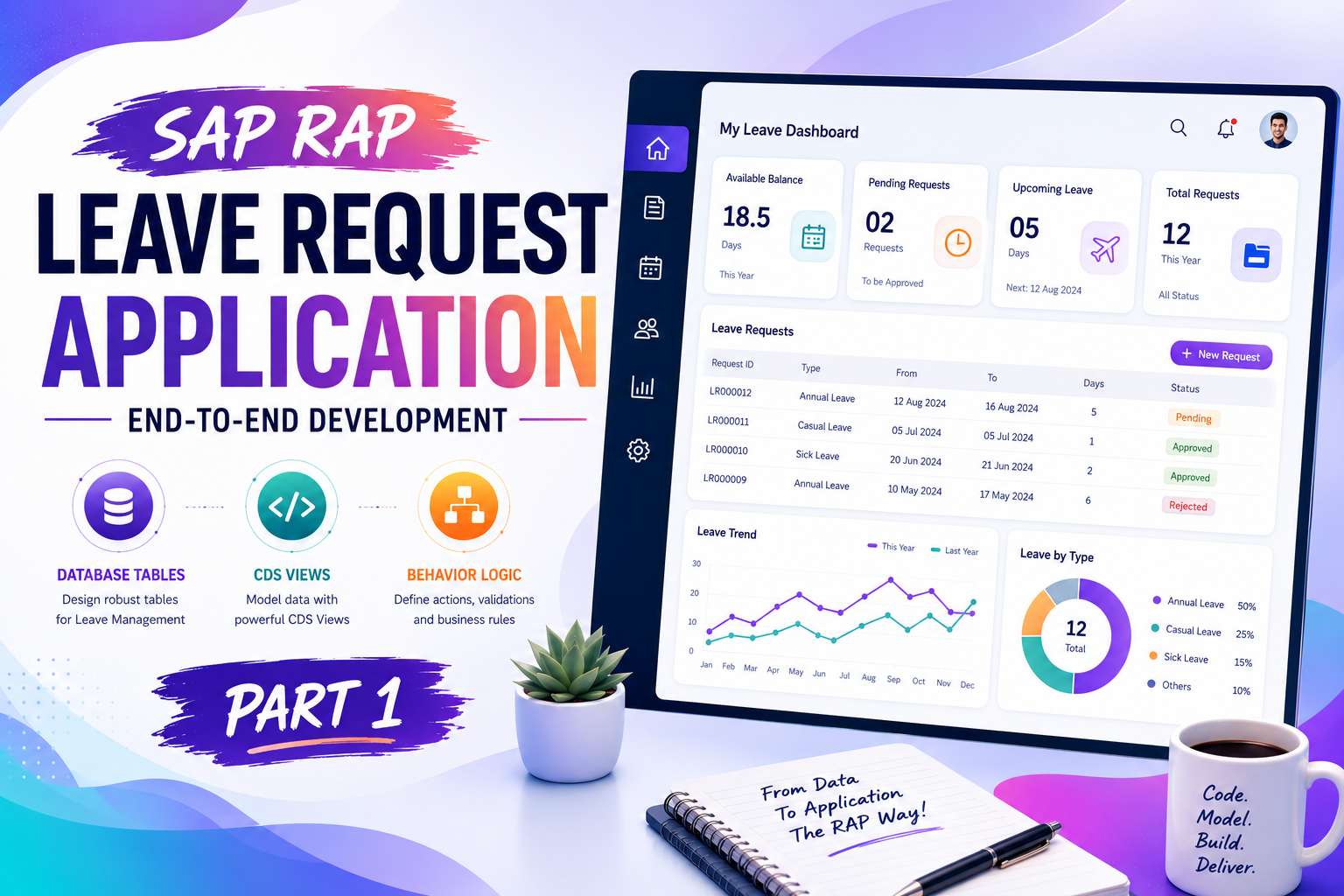
Leave management is one of the most common business processes across organizations, yet many companies continue to rely on fragmented systems, spreadsheets, and manual approval workflows. Modern enterprises require intelligent, scalable, and user-friendly applications that simplify leave request management while ensuring compliance with organizational policies. In this first part of our SAP RAP End-to-End Leave
- June 3, 2026
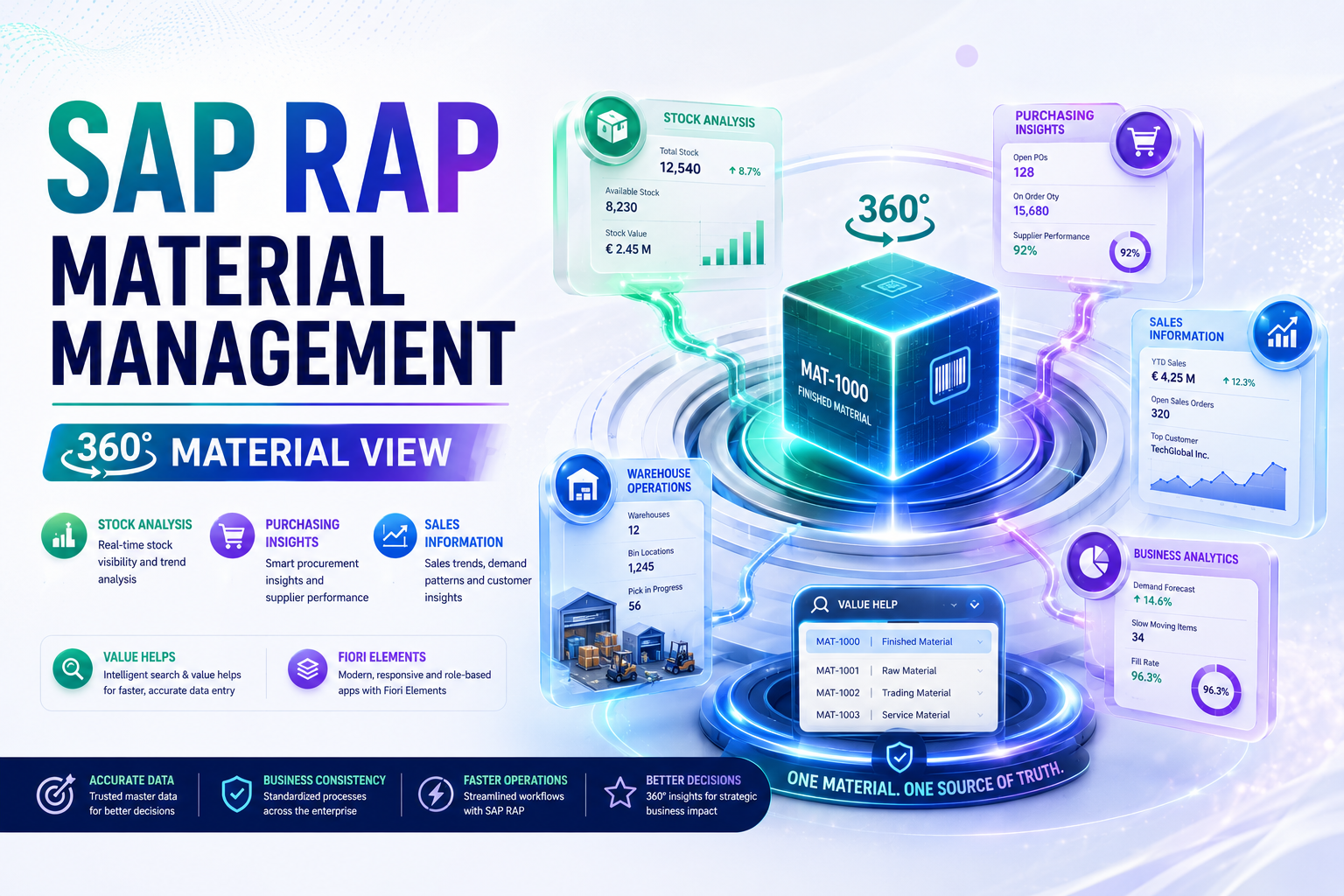
Material Master data sits at the heart of nearly every business process in SAP. From procurement and inventory management to sales fulfillment and production planning, accurate and accessible material information is critical for operational success. In this hands-on SAP RAP tutorial, we build a comprehensive Material Management application that provides a unified 360-degree view of
- June 3, 2026
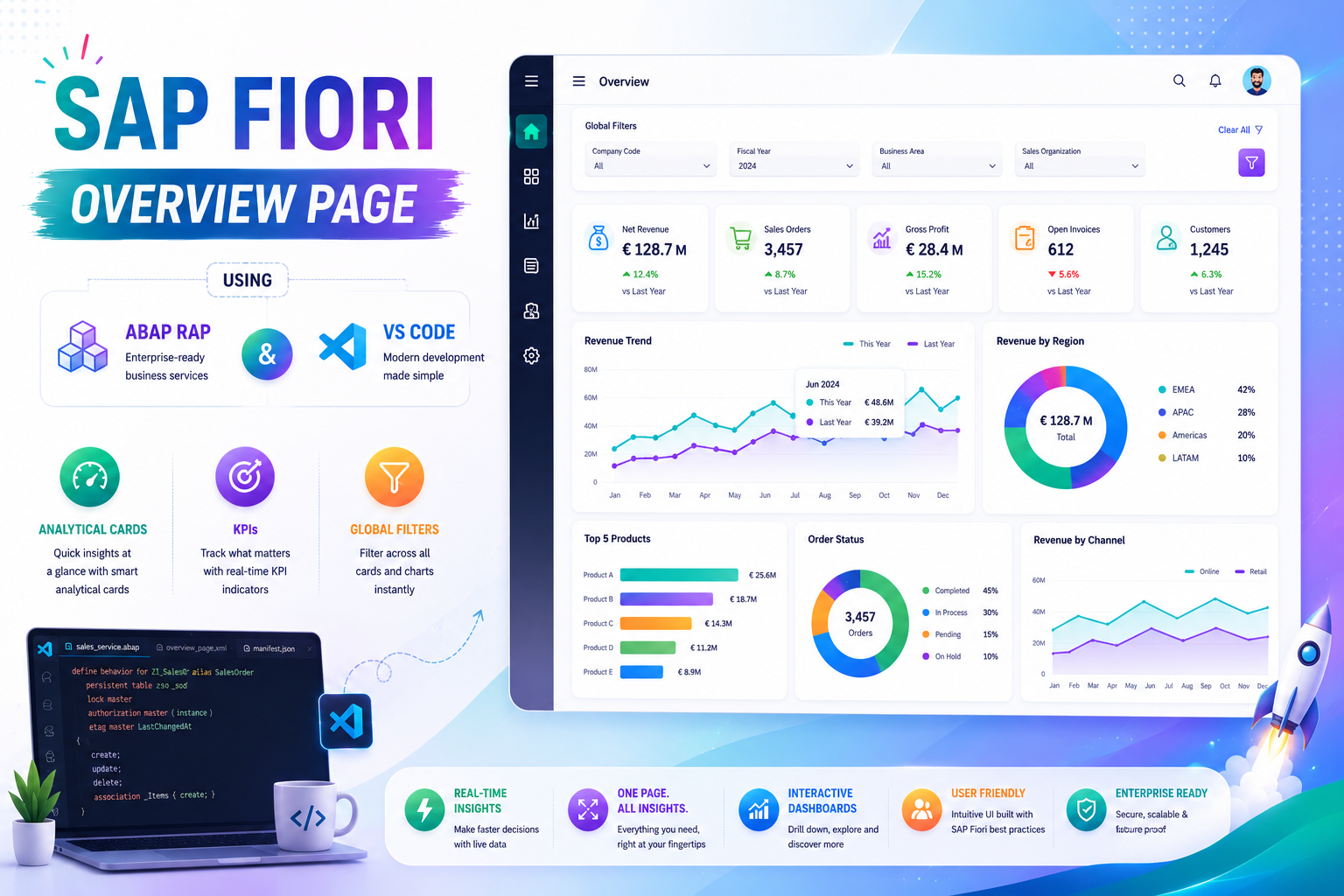
In today’s data-driven enterprise landscape, business users need more than transactional applications—they need intelligent dashboards that provide real-time insights, visual analytics, and actionable information at a glance. SAP Fiori Overview Pages (OVP) address this requirement by bringing together multiple analytical and transactional data sources into a single, role-based user experience. This comprehensive tutorial demonstrates how