








Archive for June, 2026
 June 3, 2026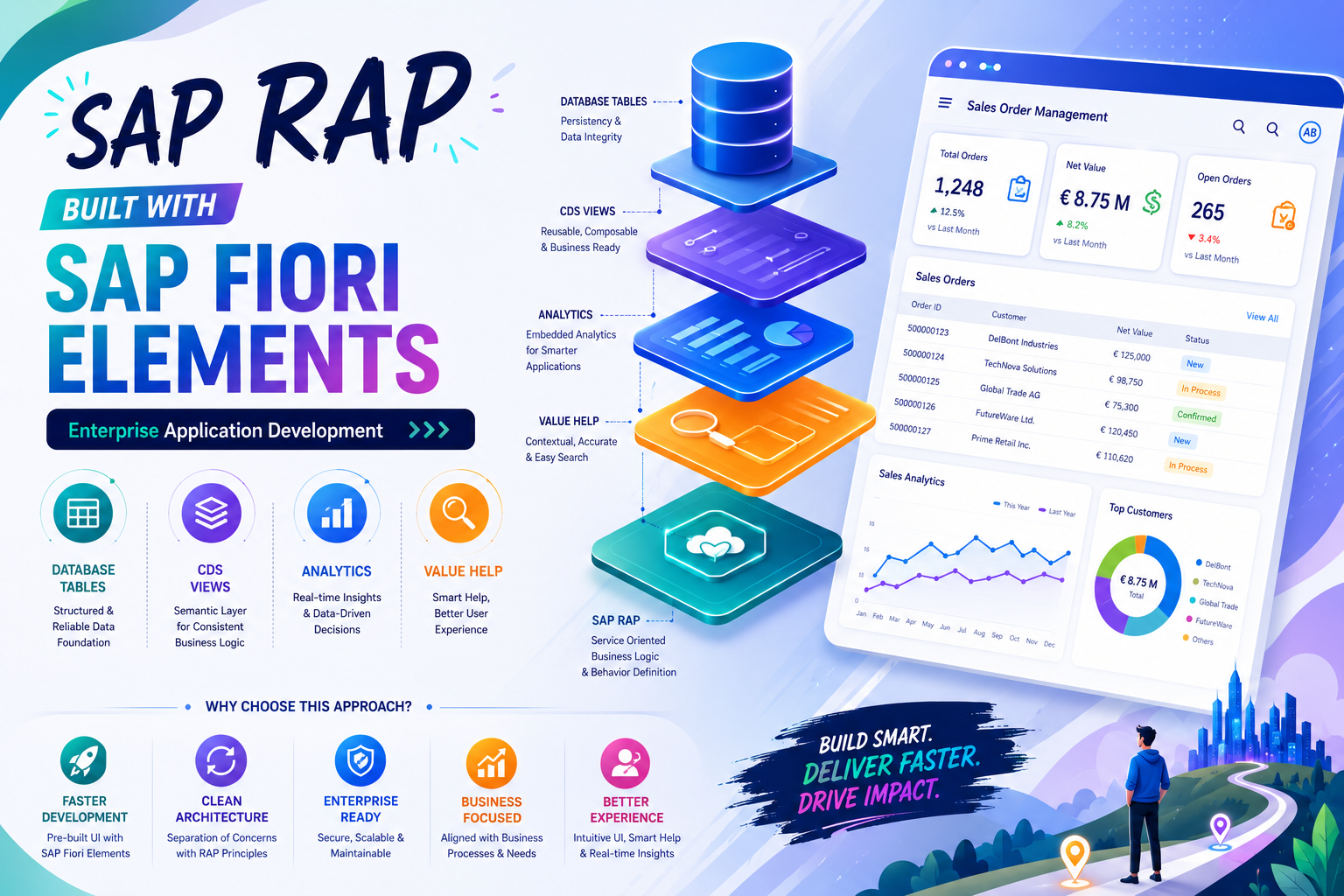
Modern SAP application development demands more than simply creating database tables and exposing services. Organizations require intelligent, scalable, and user-friendly applications that seamlessly combine transactional processing, analytical capabilities, and intuitive user experiences. The SAP ABAP RESTful Application Programming Model (RAP), together with SAP Fiori Elements, provides a powerful framework for building enterprise-grade applications while significantly
- June 3, 2026
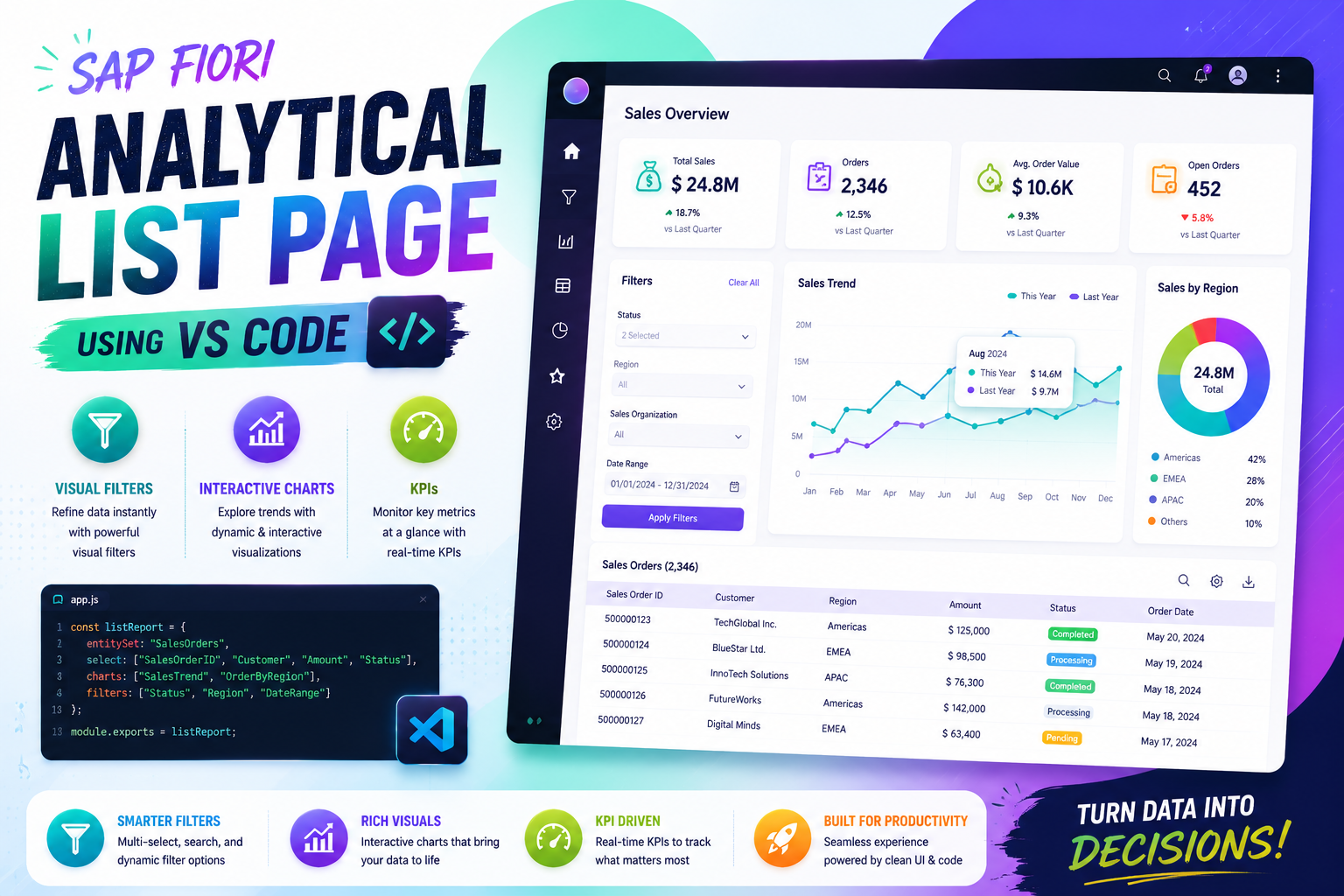
Data-driven decision-making has become a fundamental requirement for modern enterprises. Business users expect applications that not only display transactional information but also provide analytical insights, interactive visualizations, and real-time business metrics within a single user experience. SAP Fiori Analytical List Pages (ALP) address this requirement by combining powerful analytical capabilities with transactional processing. Through interactive
- June 1, 2026
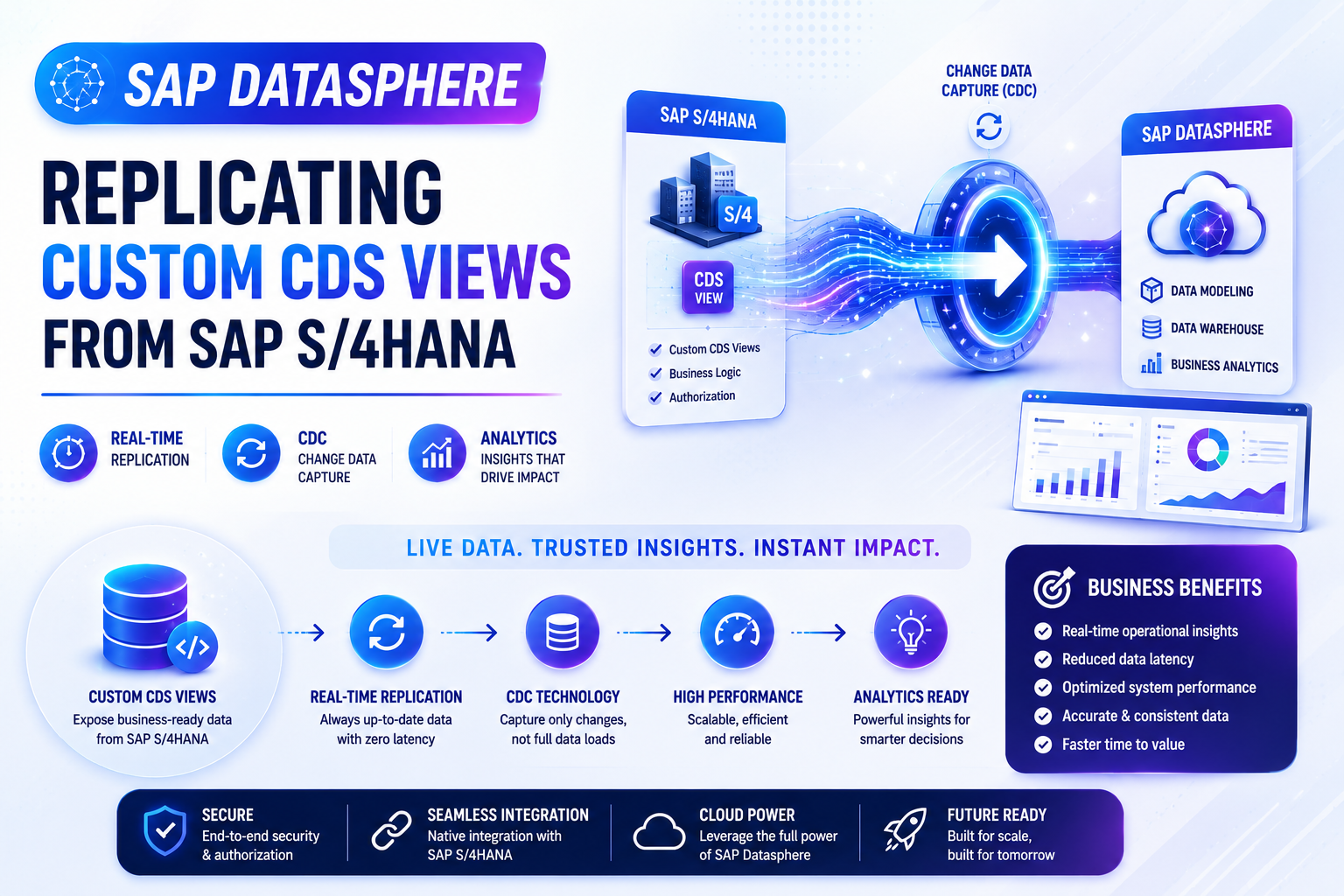
Modern enterprises rely on real-time insights to make informed business decisions. As organizations increasingly adopt SAP Datasphere as their strategic data platform, the ability to replicate operational data from SAP S/4HANA becomes essential for delivering timely analytics, reporting, and business intelligence. In this comprehensive guide, we explore the complete process of replicating custom CDS Views
- June 1, 2026
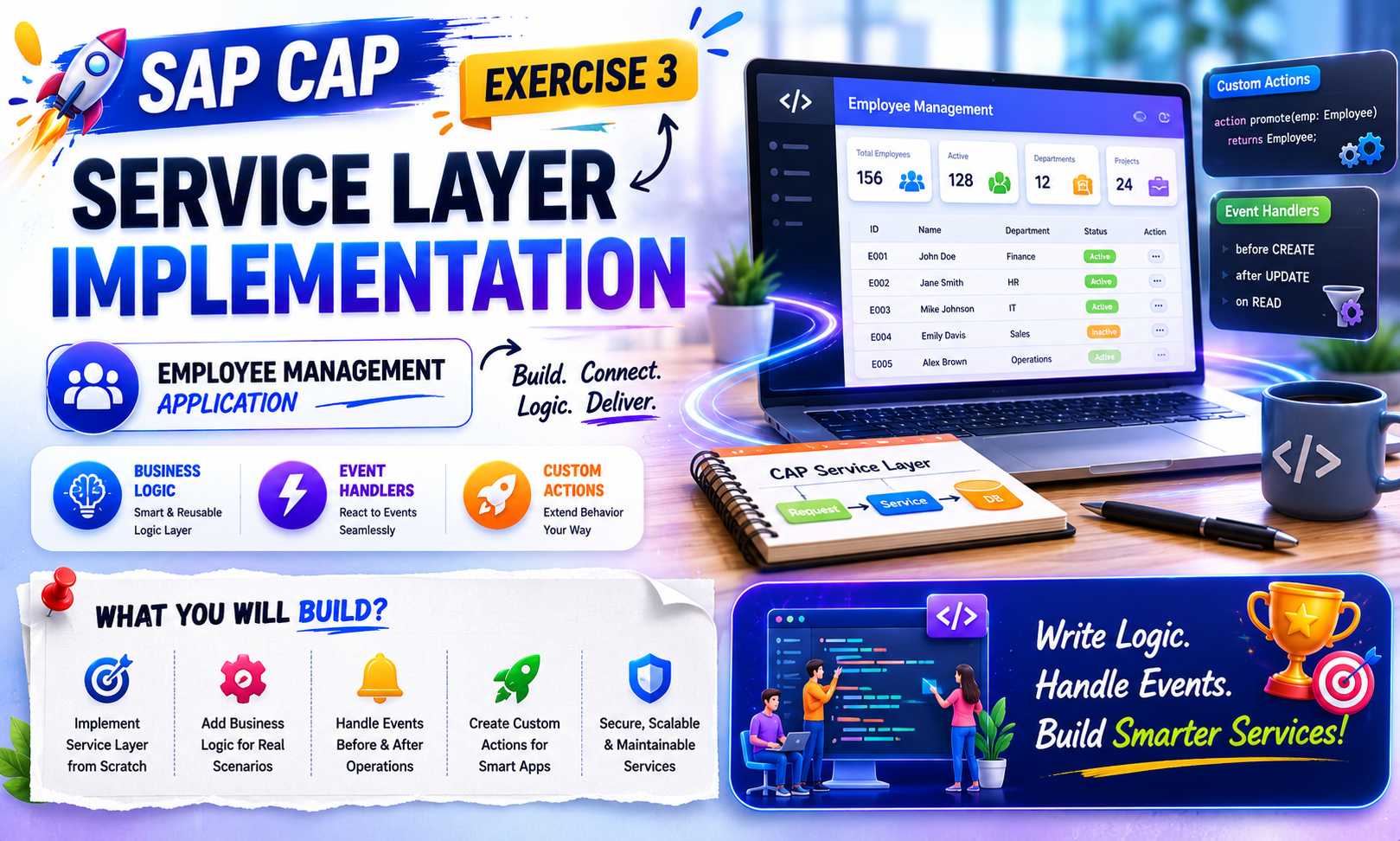
After establishing the data model and defining the foundational entities for our Employee Management application, the next critical step in SAP CAP development is creating the service layer. While data models define what information is stored, the service layer determines how that information is accessed, validated, processed, and exposed to consumers. In this exercise, we
- June 1, 2026
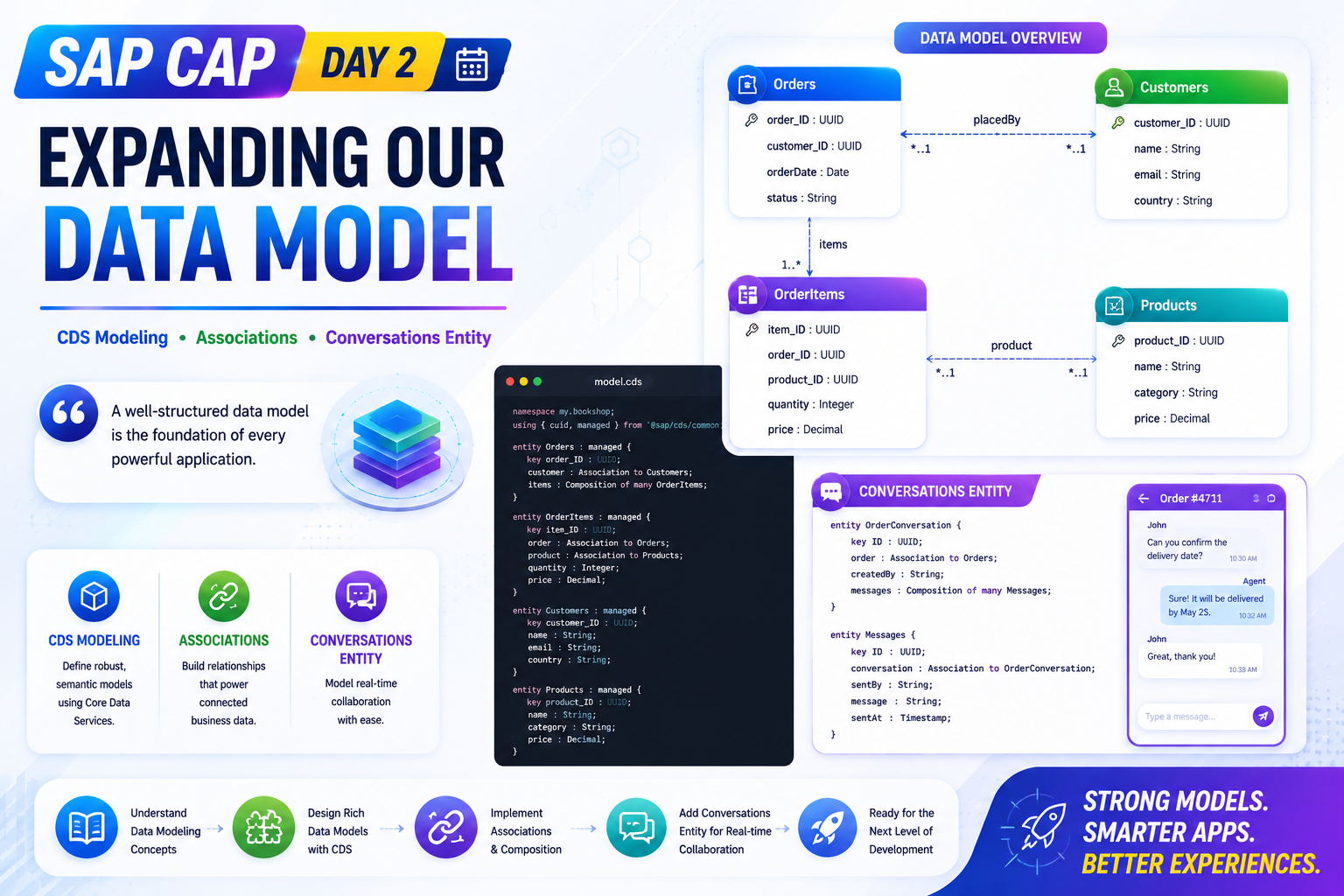
After successfully setting up our SAP CAP development environment and creating our first CAP project in Day 1, it is time to move deeper into one of the most important aspects of enterprise application development: data modeling. In Day 2 of our SAP CAP Learning Journey, we focus on extending our application by introducing a
- June 1, 2026
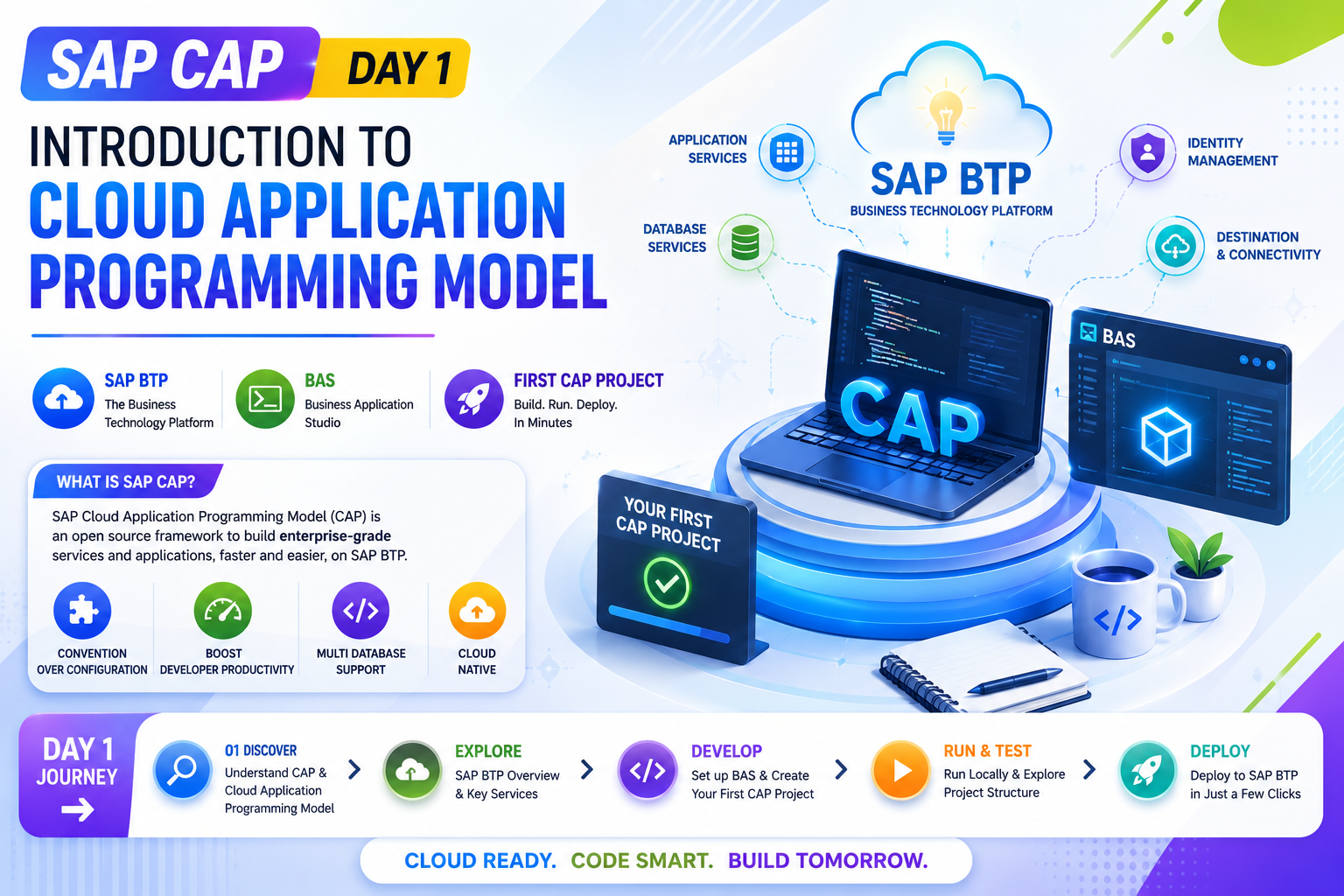
As SAP continues its transformation toward cloud-native development, developers are increasingly required to expand their skill sets beyond traditional ABAP programming. One of the most significant innovations in SAP’s cloud ecosystem is the SAP Cloud Application Programming Model (CAP), a powerful framework designed for building enterprise-grade cloud applications efficiently and rapidly. In Day 1 of
- June 1, 2026
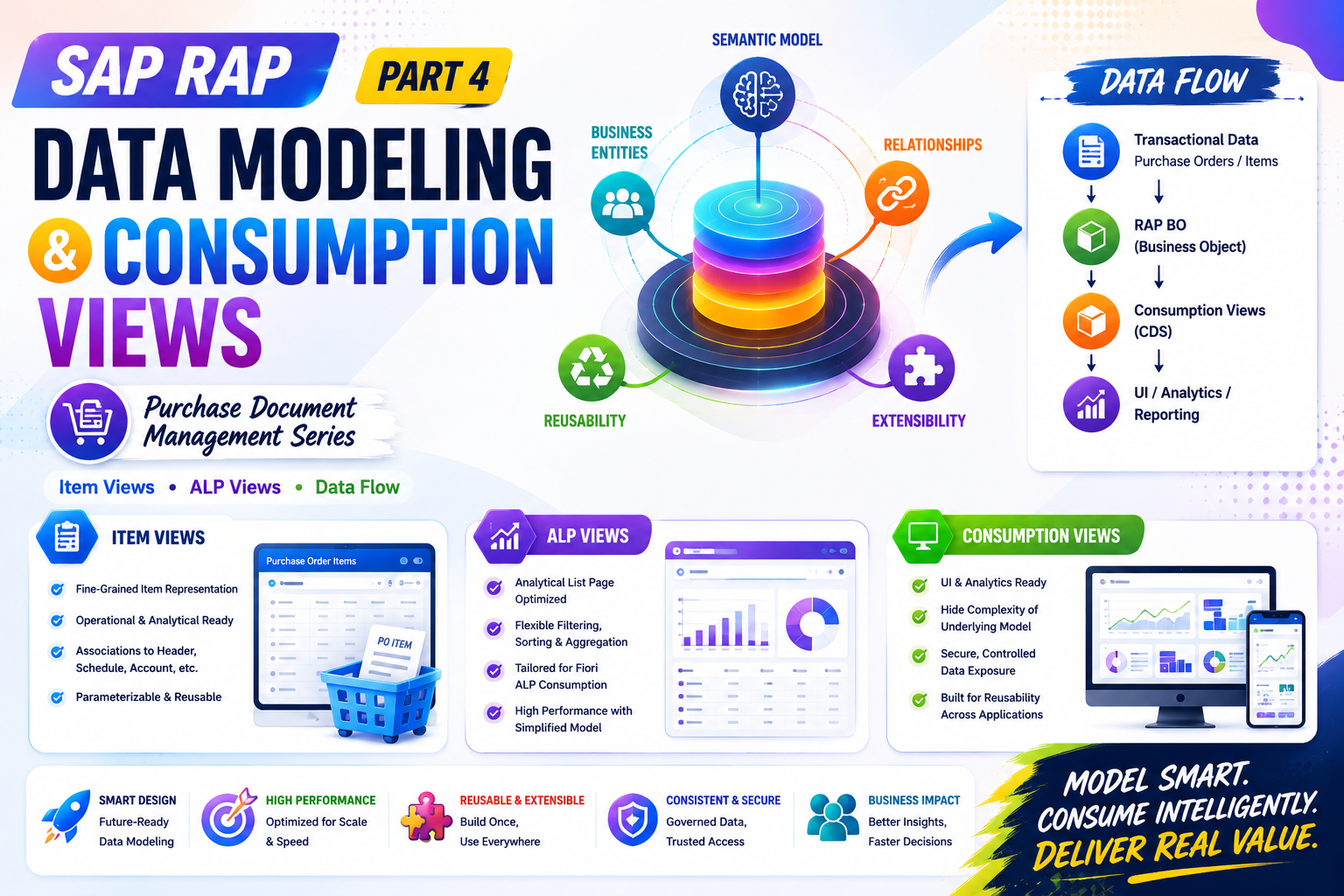
As our SAP RAP Purchase Document Management application continues to evolve, we now move beyond foundational CDS View architecture and focus on one of the most important aspects of enterprise application development: delivering business-ready data to end users. In Part 4 of this series, we explore how consumption views serve as the bridge between backend
- June 1, 2026
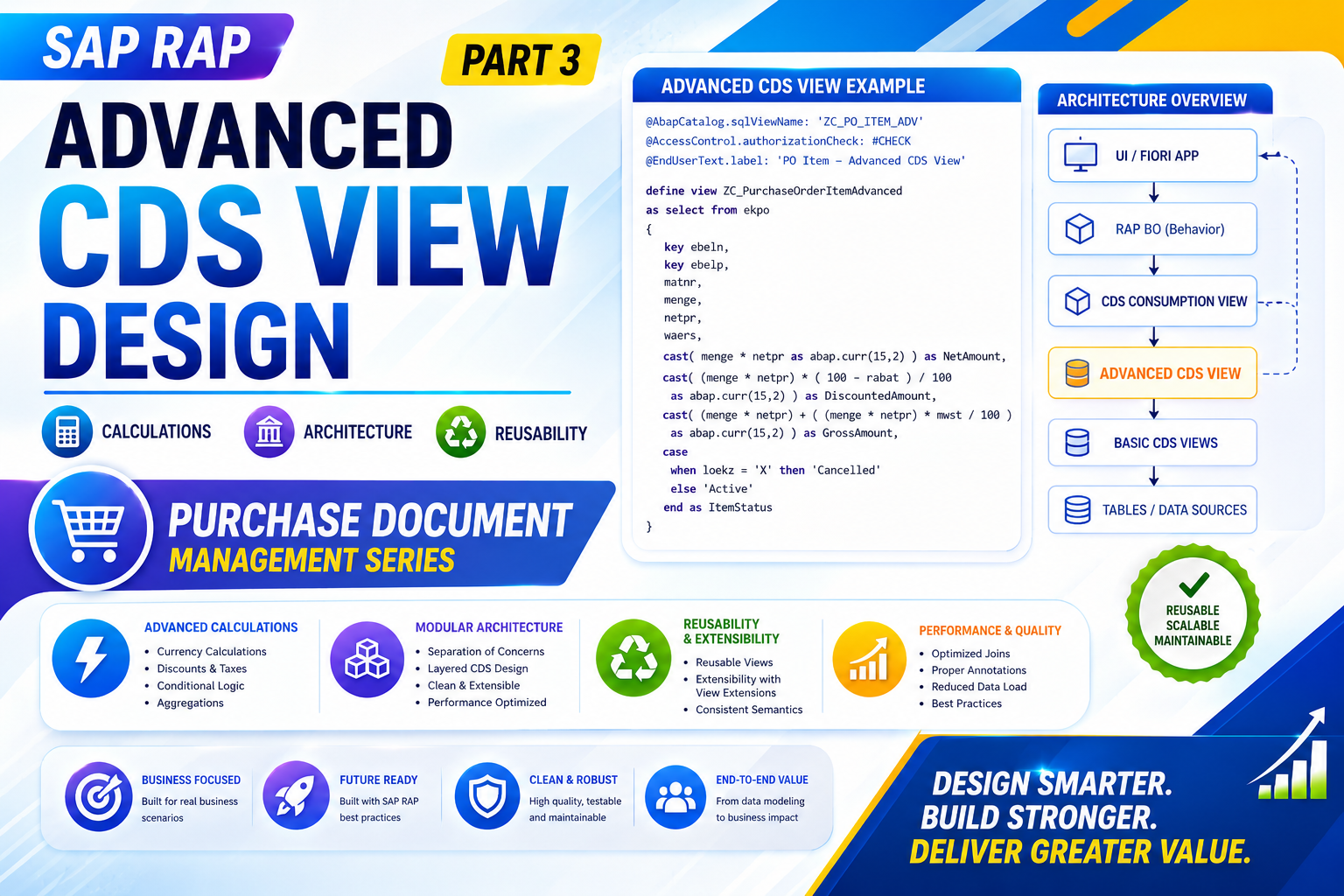
As enterprise applications evolve, the quality of their data model becomes one of the most critical factors influencing maintainability, scalability, and performance. In Part 3 of the SAP RAP Purchase Document Management Series, we shift our focus from testing and validation to the architectural principles that drive effective CDS View design. Core Data Services (CDS)
- June 1, 2026
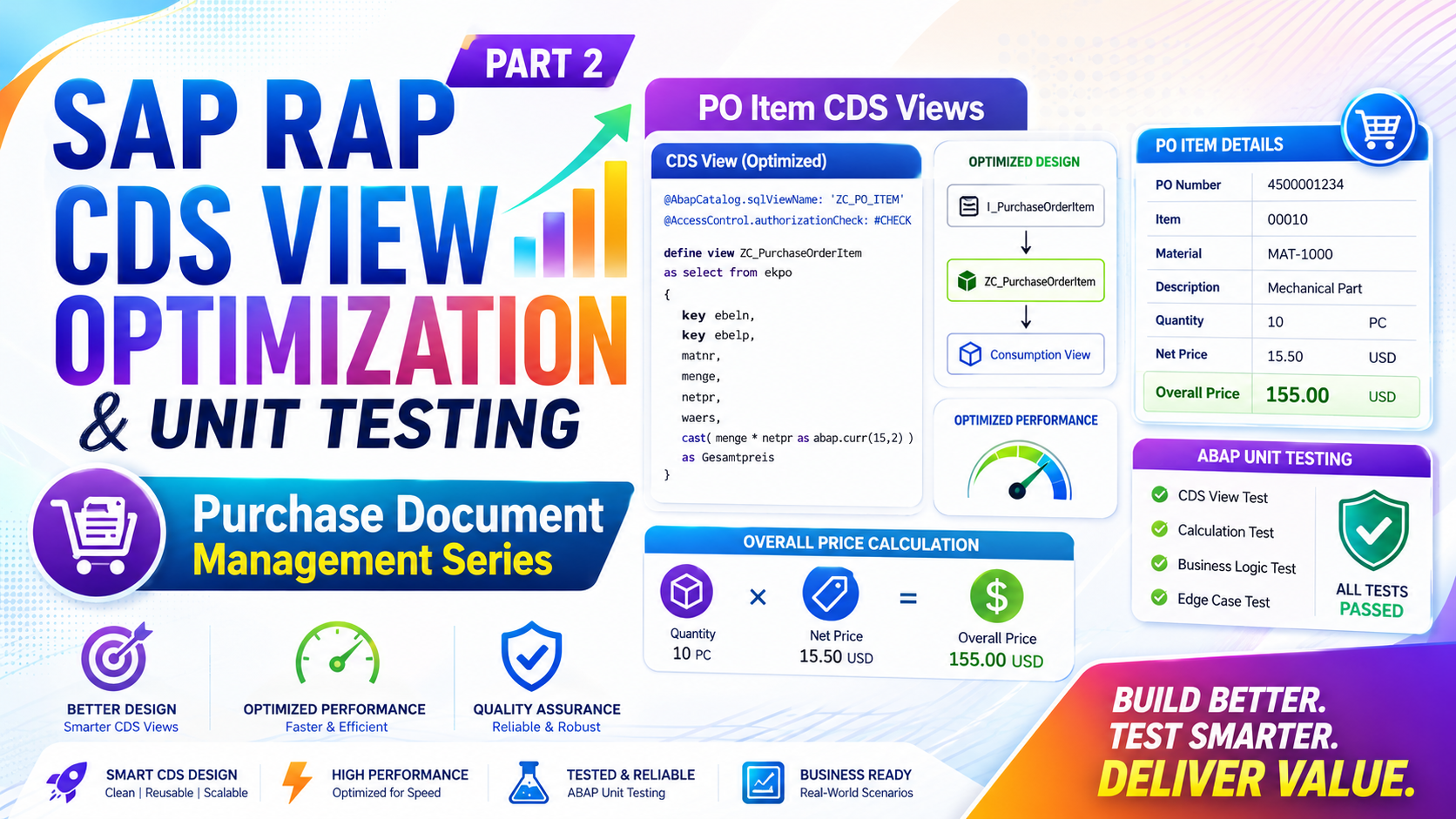
Building on the foundation established in Part 1, this second installment of the SAP RAP Purchase Document Management Series focuses on enhancing CDS View design and implementing robust testing strategies to ensure application accuracy, performance, and reliability. As enterprise applications grow in complexity, business calculations become increasingly critical. One of the most important aspects of
- June 1, 2026
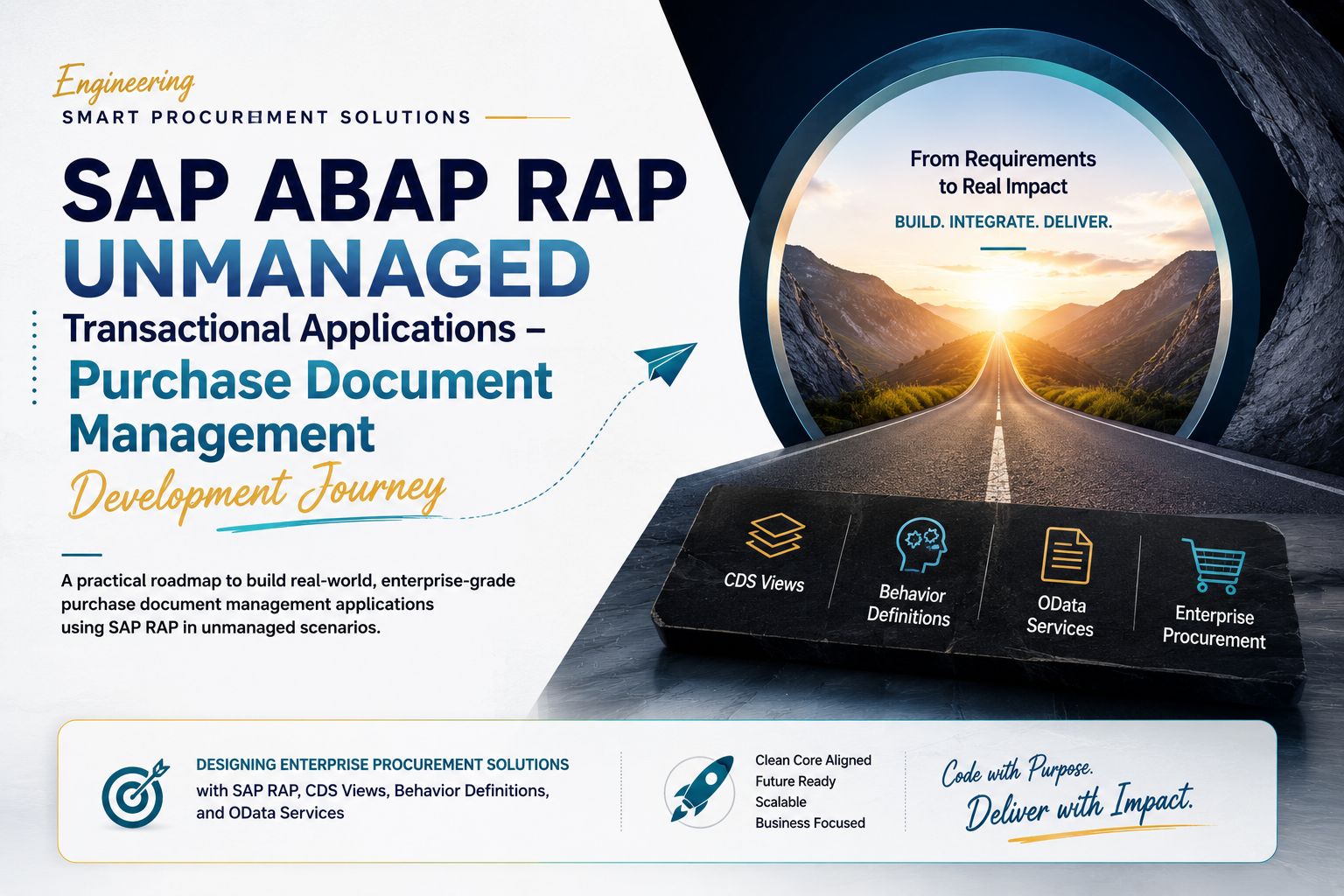
The SAP ABAP RESTful Application Programming Model (RAP) is transforming enterprise application development by providing a modern framework for creating scalable, maintainable, and cloud-ready business applications. While managed RAP scenarios automate much of the transactional processing, unmanaged RAP offers developers complete control over business logic, making it the preferred choice for integrating existing legacy applications