








SAP BTP
 June 3, 2026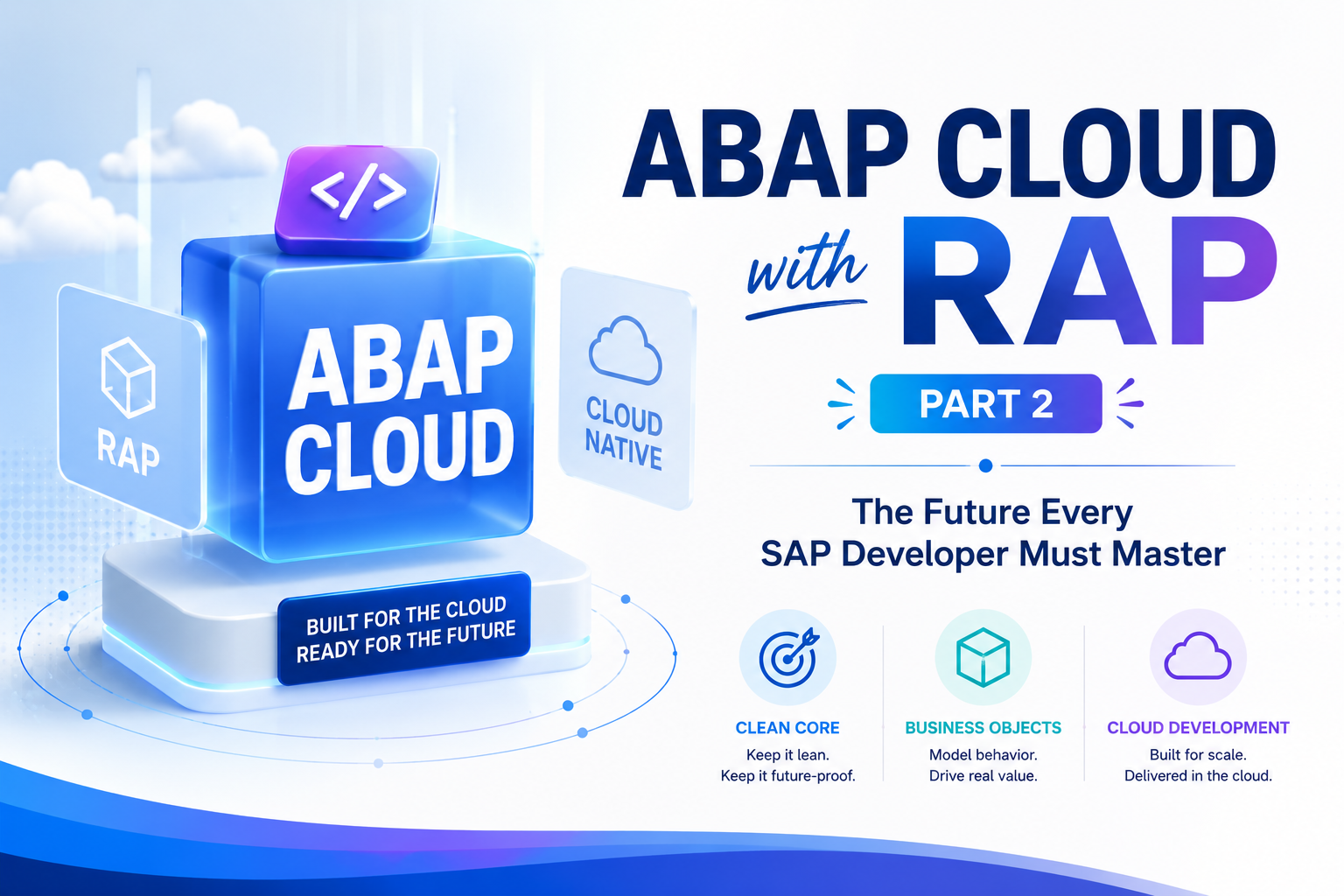
The SAP development ecosystem is undergoing one of its most significant transformations since the introduction of ABAP Objects and SAP HANA. As organizations embrace cloud-first strategies and clean-core principles, SAP is redefining how enterprise applications are built, extended, and maintained. At the center of this transformation are two strategic technologies: ABAP Cloud and the ABAP
- June 3, 2026
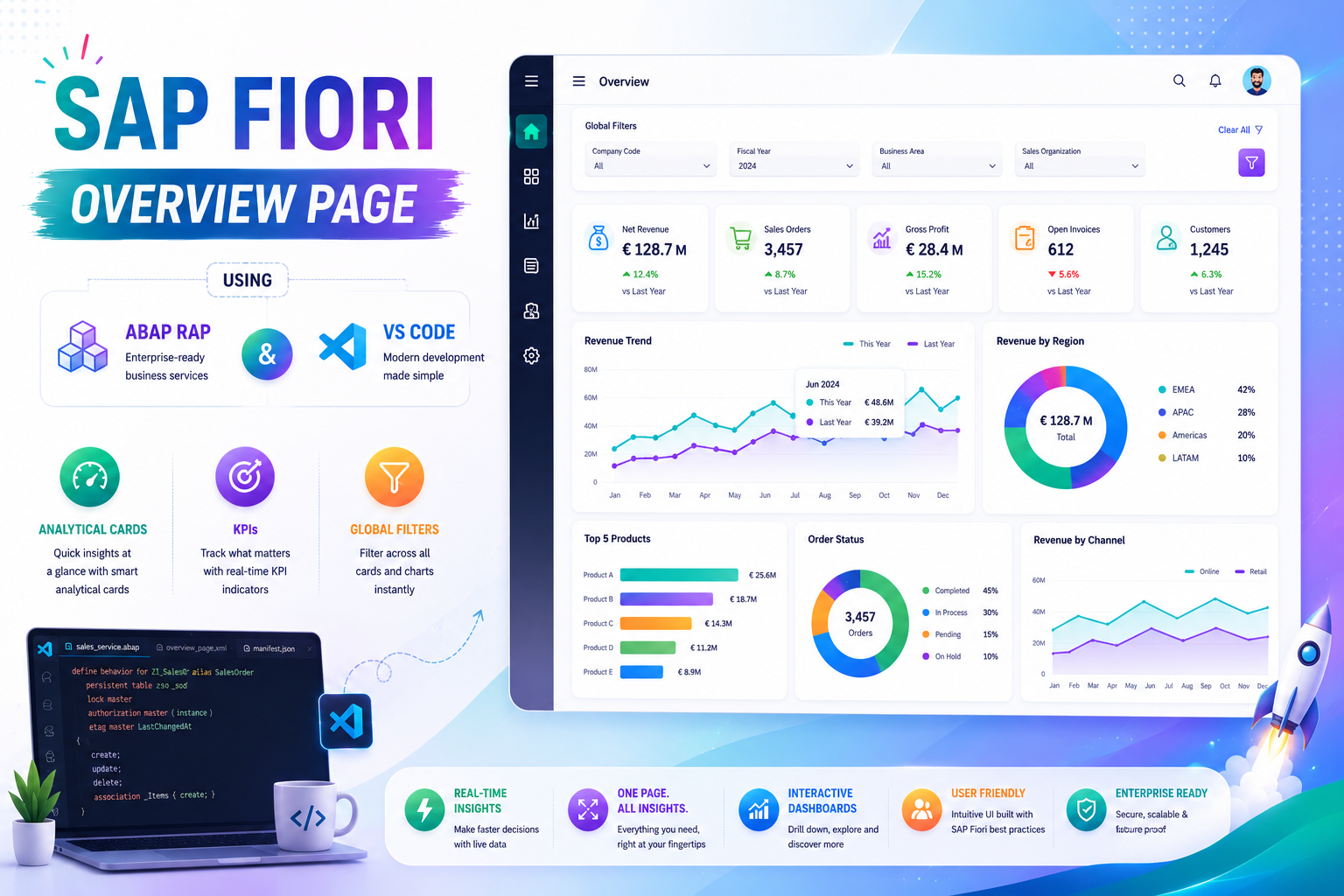
In today’s data-driven enterprise landscape, business users need more than transactional applications—they need intelligent dashboards that provide real-time insights, visual analytics, and actionable information at a glance. SAP Fiori Overview Pages (OVP) address this requirement by bringing together multiple analytical and transactional data sources into a single, role-based user experience. This comprehensive tutorial demonstrates how
- June 1, 2026
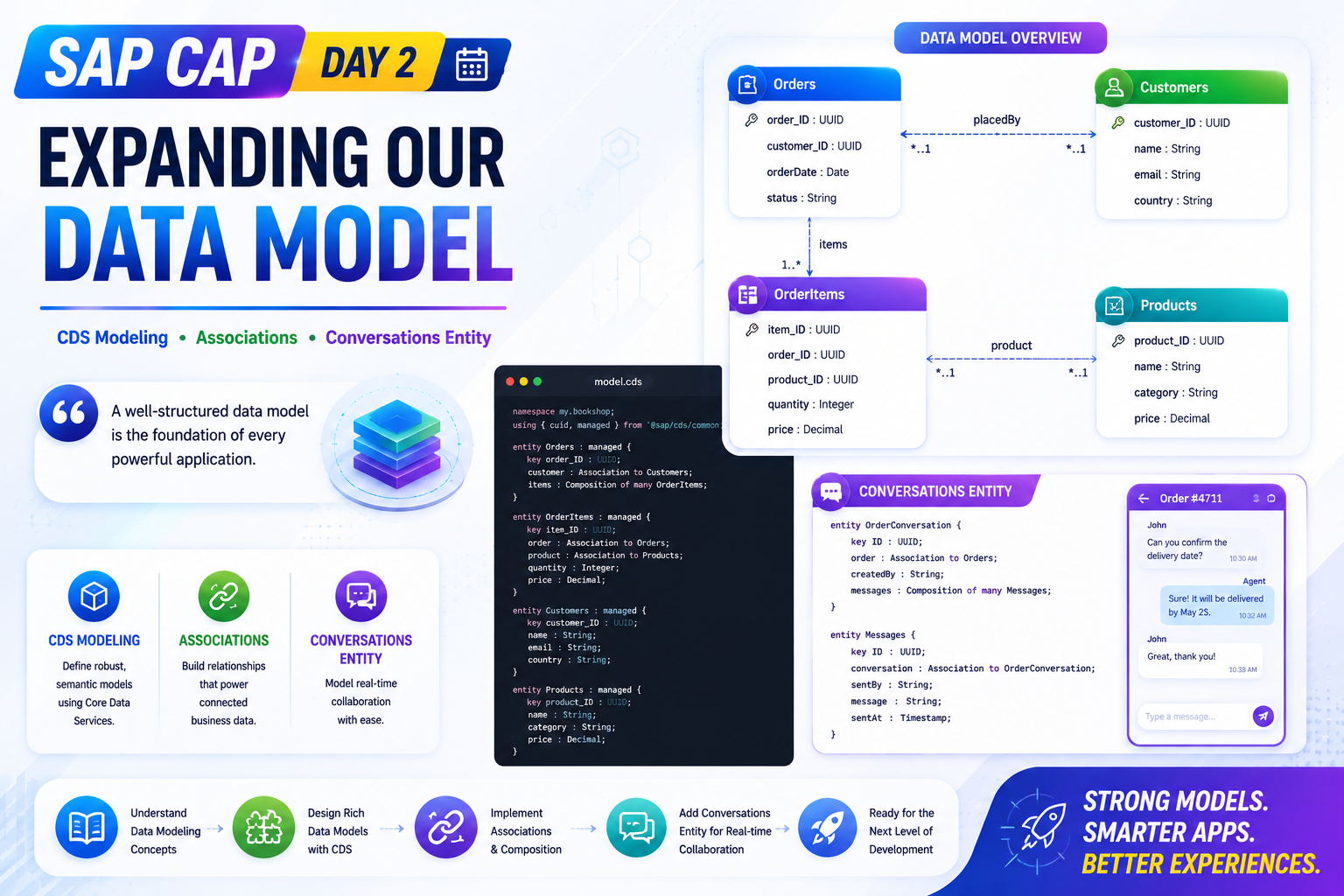
After successfully setting up our SAP CAP development environment and creating our first CAP project in Day 1, it is time to move deeper into one of the most important aspects of enterprise application development: data modeling. In Day 2 of our SAP CAP Learning Journey, we focus on extending our application by introducing a
- June 1, 2026
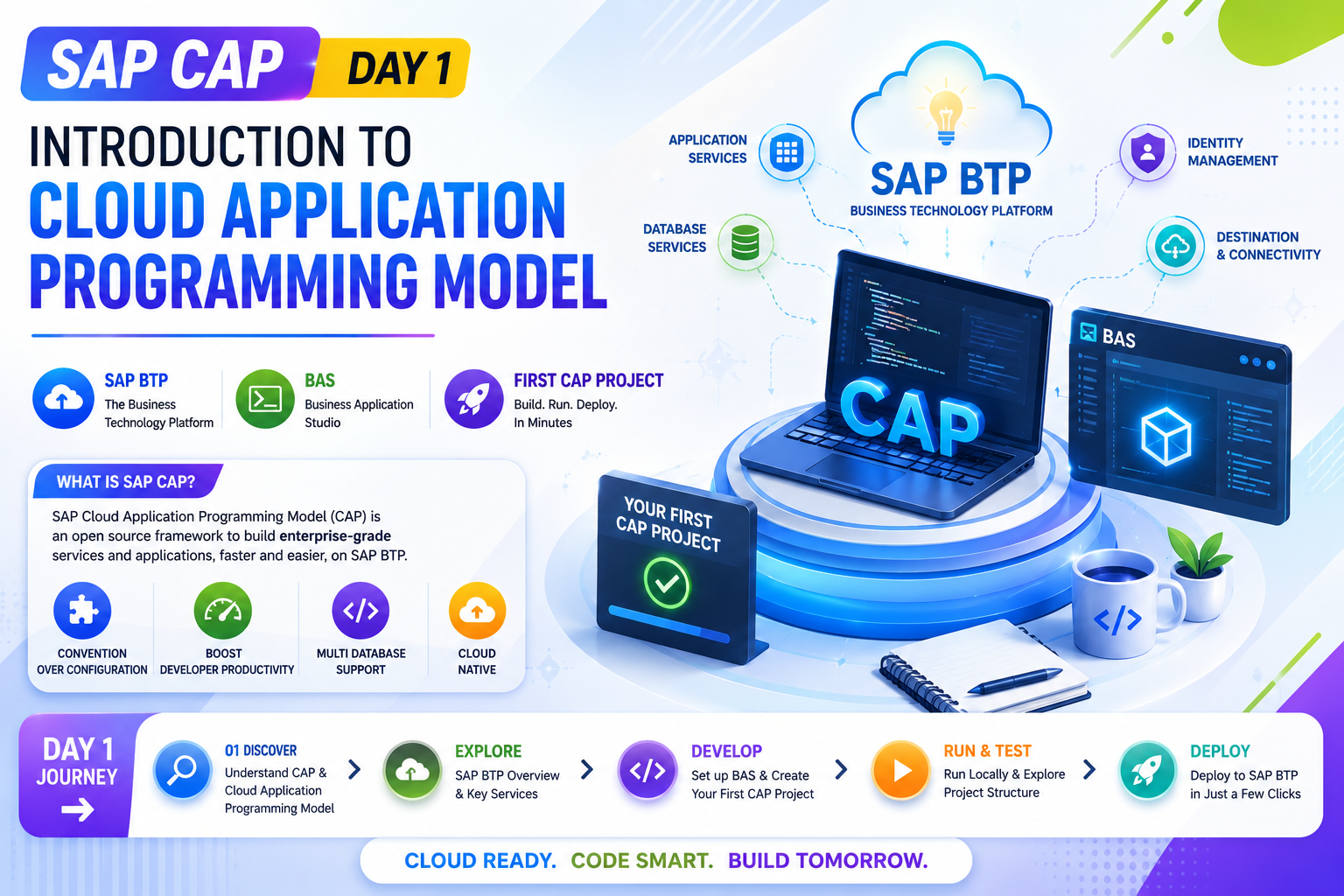
As SAP continues its transformation toward cloud-native development, developers are increasingly required to expand their skill sets beyond traditional ABAP programming. One of the most significant innovations in SAP’s cloud ecosystem is the SAP Cloud Application Programming Model (CAP), a powerful framework designed for building enterprise-grade cloud applications efficiently and rapidly. In Day 1 of
- May 31, 2026
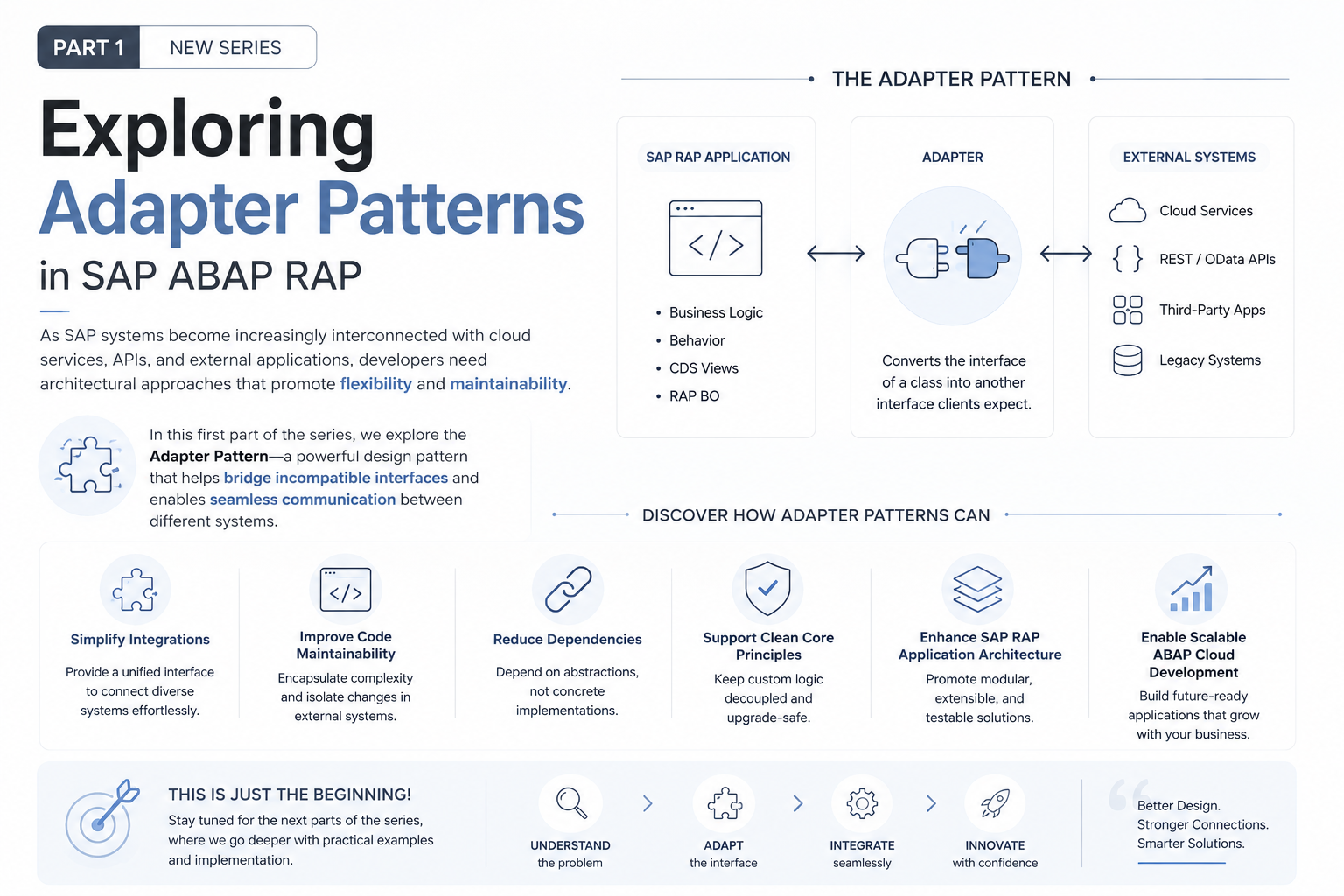
Modern SAP applications rarely operate in isolation. They constantly interact with external systems, legacy applications, APIs, cloud services, and various business components. As organizations embrace SAP RAP and ABAP Cloud, designing applications that are flexible, maintainable, and easy to extend has become more important than ever. In Part 1 of this series, we explore one