












 June 1, 2026
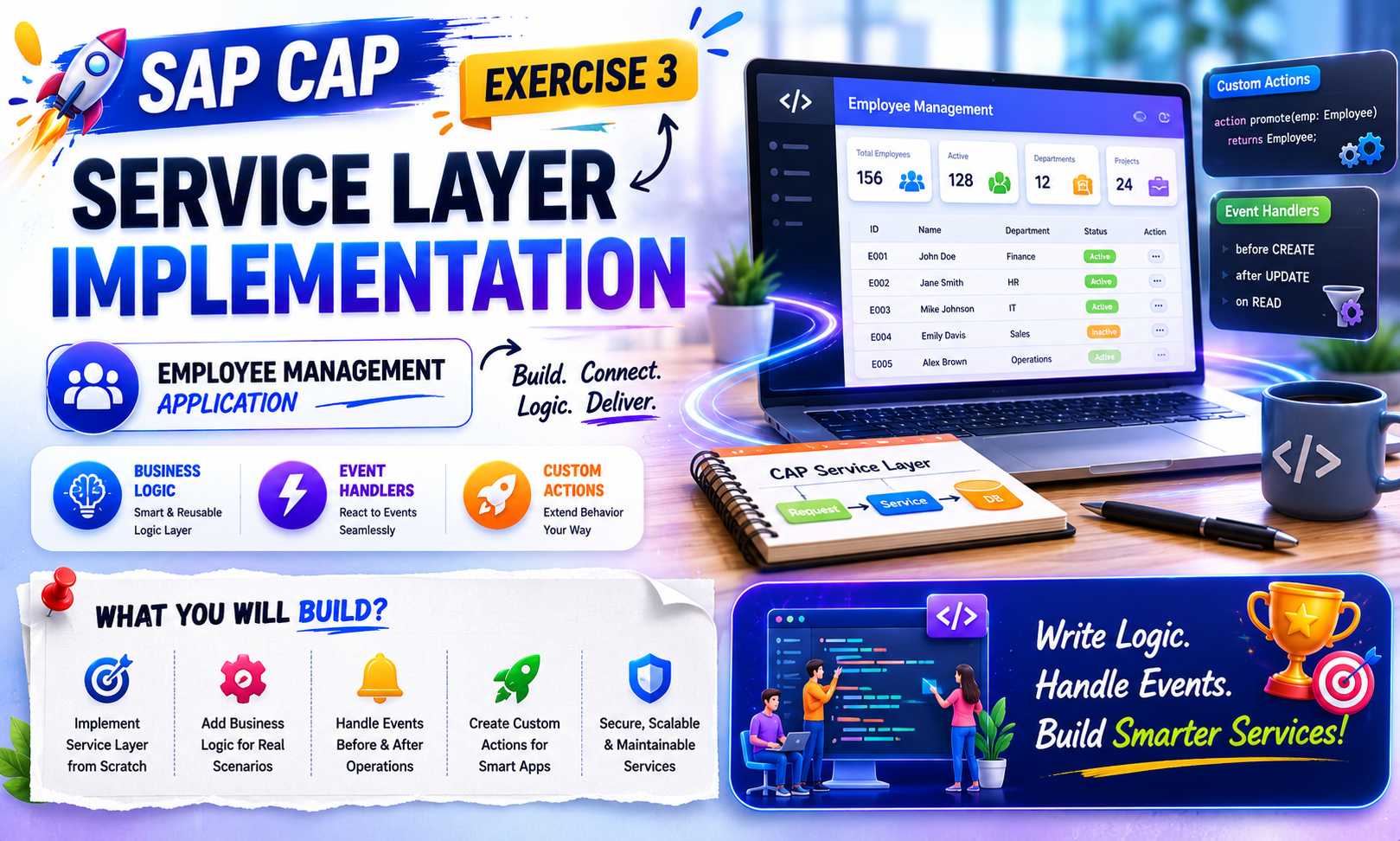
After establishing the data model and defining the foundational entities for our Employee Management application, the next critical step in SAP CAP development is creating the service layer. While data models define what information is stored, the service layer determines how that information is accessed, validated, processed, and exposed to consumers.
In this exercise, we move beyond simple data definitions and enter the business logic layer of our application. The service layer acts as the heart of a CAP application, providing APIs, implementing validations, enforcing business rules, and enabling custom business operations.
Using SAP CAP’s service-oriented architecture, developers can expose data through OData services while implementing sophisticated business logic using JavaScript and Node.js. This powerful combination enables the creation of enterprise-grade applications that remain clean, maintainable, and scalable.
Throughout this exercise, we build an Employee Management application that demonstrates how CAP services interact with entities, process requests, and execute custom logic. We begin by creating a new CAP project, defining employee and department entities, loading sample data, and deploying the schema to a local SQLite database.
Once the data model is operational, we focus on service implementation. Using event handlers and lifecycle hooks, we intercept create, read, update, and delete operations to enforce business rules and maintain data integrity.
A key highlight of this chapter is the implementation of custom actions such as salary updates. Unlike standard CRUD operations, custom actions allow developers to encapsulate complex business processes within reusable service operations. This capability is essential for building enterprise applications where business processes extend beyond simple database transactions.
The article also demonstrates how to implement before-hooks, custom event handlers, and entity-specific logic. These techniques allow developers to validate incoming data, enrich business information, and execute custom processing before records are persisted.
By the end of this exercise, readers will understand how SAP CAP transforms a simple data model into a fully functional business application capable of supporting real-world enterprise scenarios.
Topics Covered
1. Understanding the SAP CAP Service Layer
- Service-Oriented Architecture
- CAP Service Concepts
- OData Exposure
- Business Logic Separation
2. Creating a New Employee Management Project
- Project Initialization
- Folder Structure
- Development Best Practices
- Project Organization
3. Defining the Data Model
- Employee Entity
- Department Entity
- Relationships and Associations
- CDS Definitions
4. Loading Initial Data
- CSV-Based Data Initialization
- Employee Master Data
- Department Data
- Data Deployment Process
5. SQLite Database Setup
- Database Configuration
- Schema Deployment
- Table Verification
- Query Testing
6. Creating the Service Layer
- Service Definitions
- Entity Exposure
- OData Service Generation
- Service Architecture
7. Implementing Business Logic
- JavaScript Service Handlers
- Event-Based Programming
- Request Processing
- Custom Business Rules
8. Event Handlers and Hooks
- Before Create Hook
- Validation Logic
- Data Enrichment
- Lifecycle Management
9. Custom Actions
- UpdateSalary Action
- Business Process Encapsulation
- Action Parameters
- Transaction Handling
10. Read Event Handling
- Custom Read Operations
- Department Data Processing
- Query Enhancements
- Response Customization
11. SAP CDS Integration
- Accessing Entities
- CDS Runtime Services
- Database Operations
- Service Consumption
12. Application Testing
- Running CAP Services
- API Validation
- Functional Testing
- Debugging Techniques
Key Takeaways
✔ Understand SAP CAP service architecture
✔ Implement business logic using JavaScript
✔ Create event handlers and lifecycle hooks
✔ Build custom actions for enterprise processes
✔ Expose entities through OData services
✔ Develop scalable cloud-native applications
✔ Apply real-world business validations
✔ Transform data models into functional services
https://drive.google.com/file/d/1h44e_W_pDUF86KnBINuDDusezNNbZyep/view?usp=sharing




 Prev Post
What do you think?
Show comments / Leave a comment