












 June 1, 2026
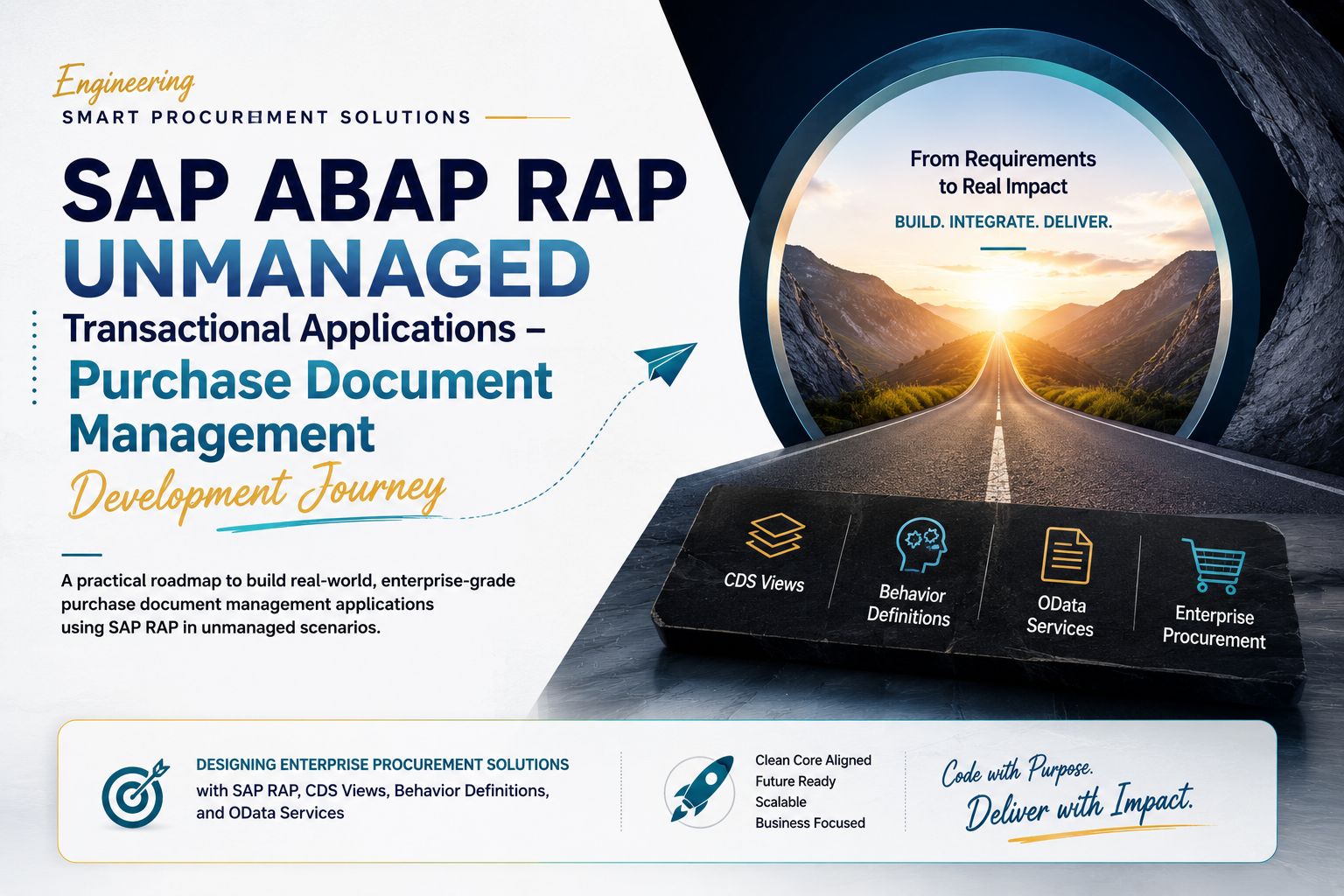
The SAP ABAP RESTful Application Programming Model (RAP) is transforming enterprise application development by providing a modern framework for creating scalable, maintainable, and cloud-ready business applications. While managed RAP scenarios automate much of the transactional processing, unmanaged RAP offers developers complete control over business logic, making it the preferred choice for integrating existing legacy applications and complex enterprise processes.
In this first installment of the Purchase Document Management Series, I share my practical experience developing an unmanaged transactional application using SAP ABAP RAP. This article focuses on designing and implementing a robust Purchase Document Management solution while exploring the architectural decisions, development techniques, and best practices that contribute to a successful RAP implementation.
Through a step-by-step approach, you’ll learn how to design database tables, create CDS views, define behavior implementations, and expose business services while maintaining full control over transactional processing. The guide bridges traditional ABAP development techniques with SAP’s modern RAP framework, enabling developers to leverage existing knowledge while embracing new development paradigms.
Whether you’re transitioning from classical ABAP development or looking to deepen your RAP expertise, this article provides practical insights and real-world examples that will accelerate your learning journey and help you build enterprise-grade SAP applications.
By the end of this guide, you’ll have a solid understanding of unmanaged RAP architecture and be equipped with the knowledge needed to create flexible, scalable, and future-ready transactional applications.
https://drive.google.com/file/d/1oNgIcJ-FggEttYTuDUiOK6XdksXIJidG/view?usp=sharing




 Prev Post
What do you think?
Show comments / Leave a comment