








SAP S/4HANA
 June 3, 2026
Data is one of the most valuable assets in modern enterprises—but its true value can only be realized when it is connected, trusted, and accessible. As a core component of SAP Business Data Cloud, SAP Datasphere empowers organizations to unify data across SAP and non-SAP systems while maintaining business context, governance, and security. With powerful
- June 3, 2026
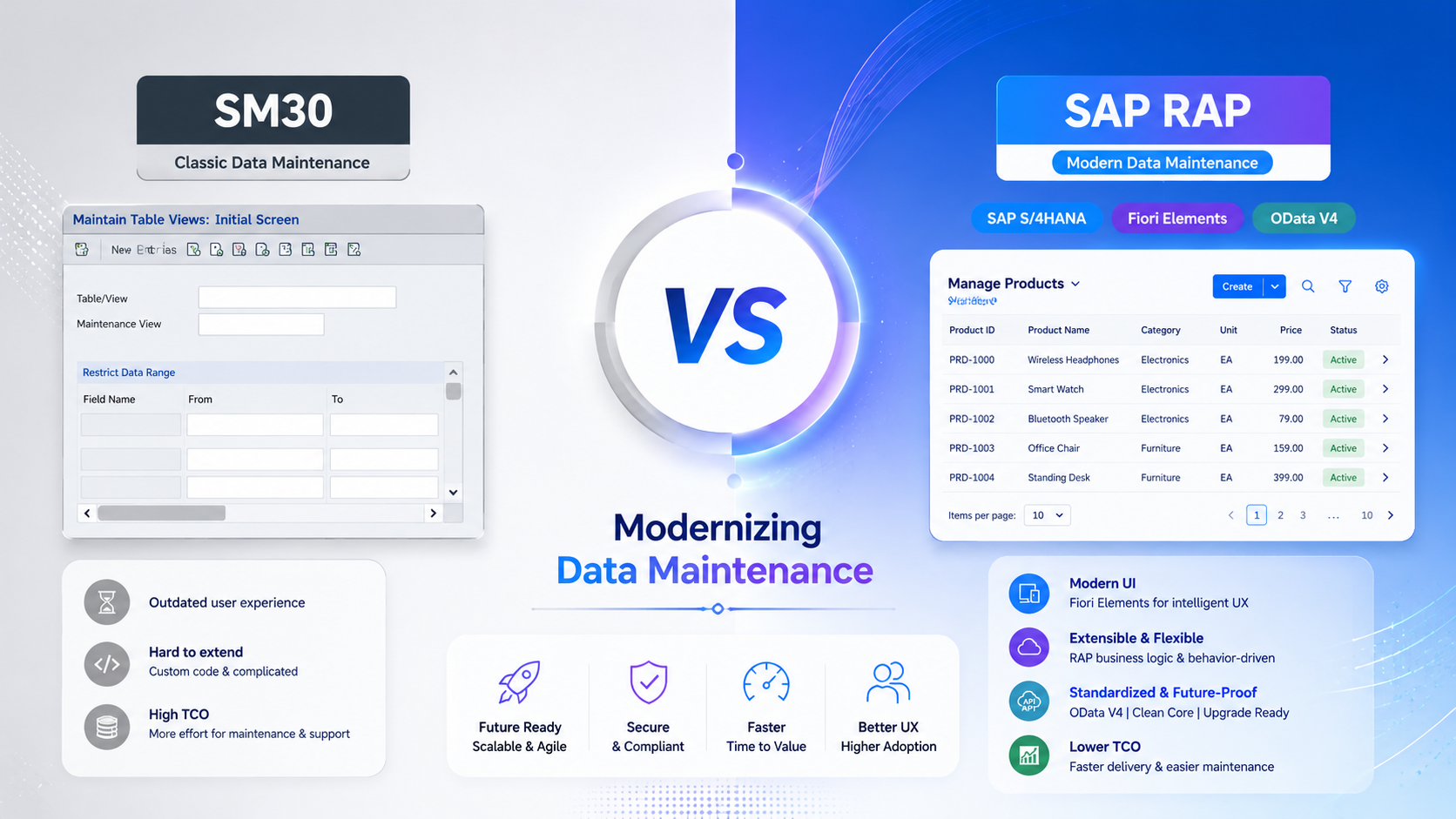
For decades, transaction SM30 has been the go-to tool for maintaining custom configuration and master data within SAP systems. While SM30 remains effective for basic table maintenance, modern business applications require significantly more than simple CRUD operations. Today’s SAP users expect responsive SAP Fiori applications, business validations, draft handling, role-based security, value helps, search capabilities,
- June 3, 2026
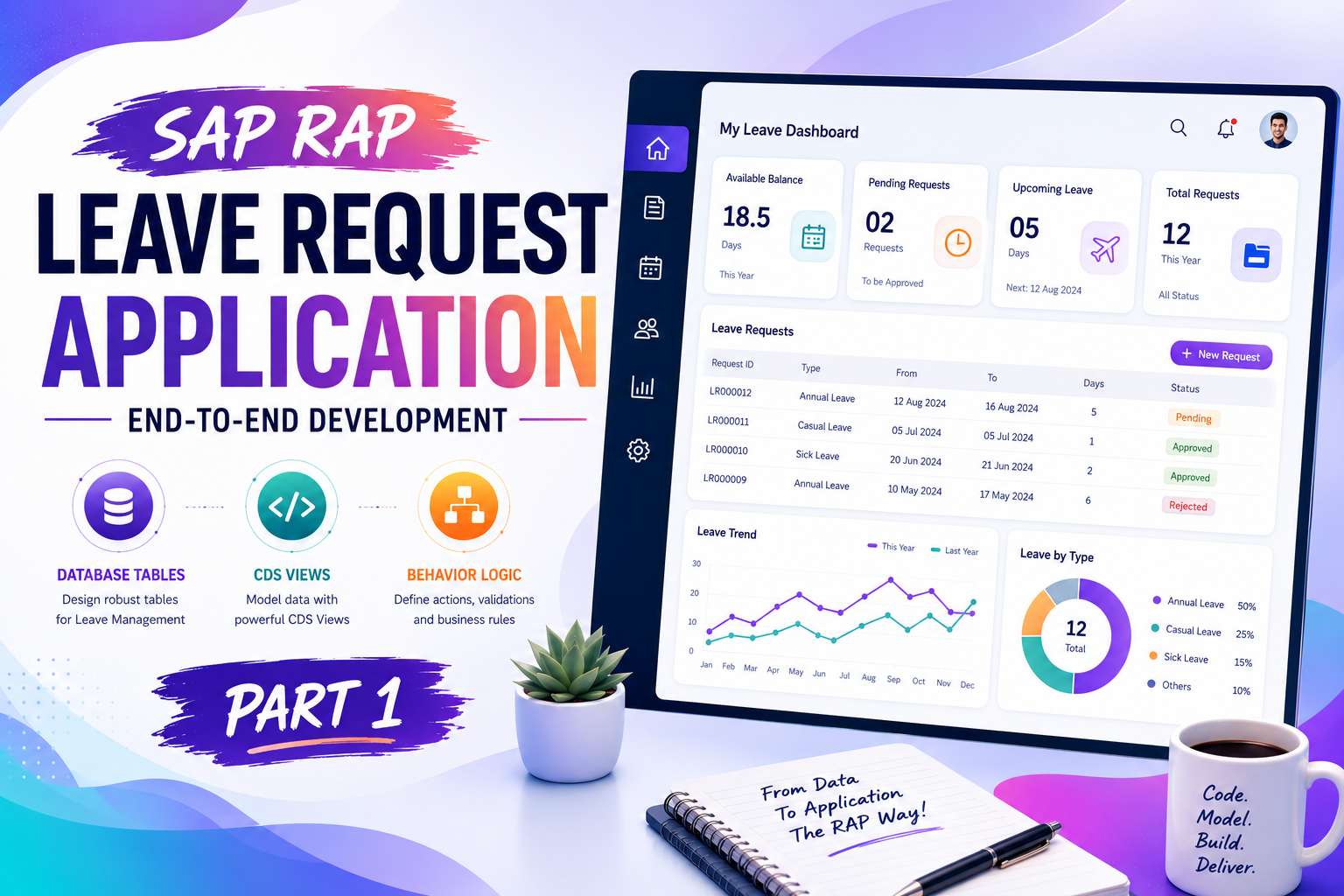
Leave management is one of the most common business processes across organizations, yet many companies continue to rely on fragmented systems, spreadsheets, and manual approval workflows. Modern enterprises require intelligent, scalable, and user-friendly applications that simplify leave request management while ensuring compliance with organizational policies. In this first part of our SAP RAP End-to-End Leave
- June 1, 2026
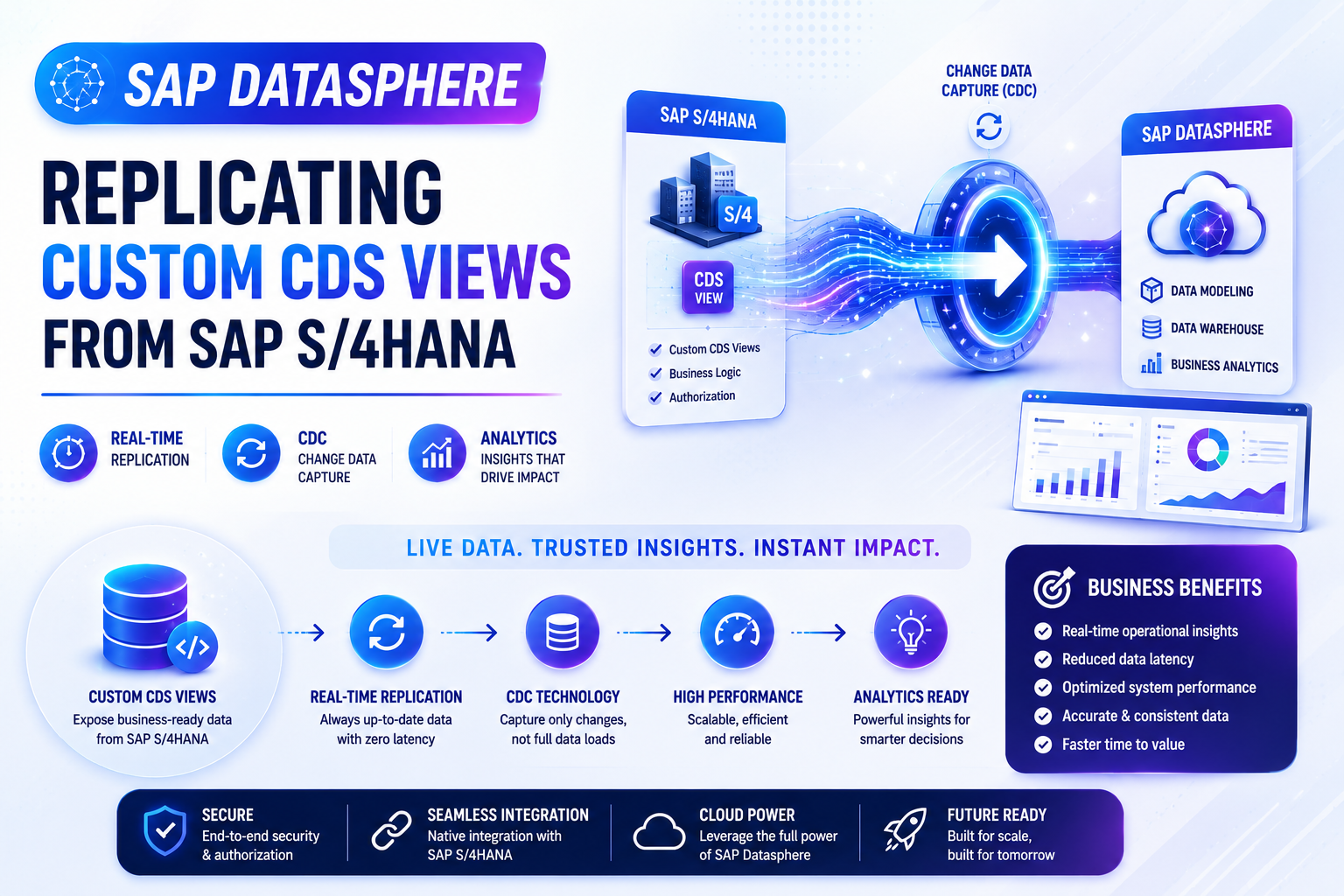
Modern enterprises rely on real-time insights to make informed business decisions. As organizations increasingly adopt SAP Datasphere as their strategic data platform, the ability to replicate operational data from SAP S/4HANA becomes essential for delivering timely analytics, reporting, and business intelligence. In this comprehensive guide, we explore the complete process of replicating custom CDS Views
- June 1, 2026
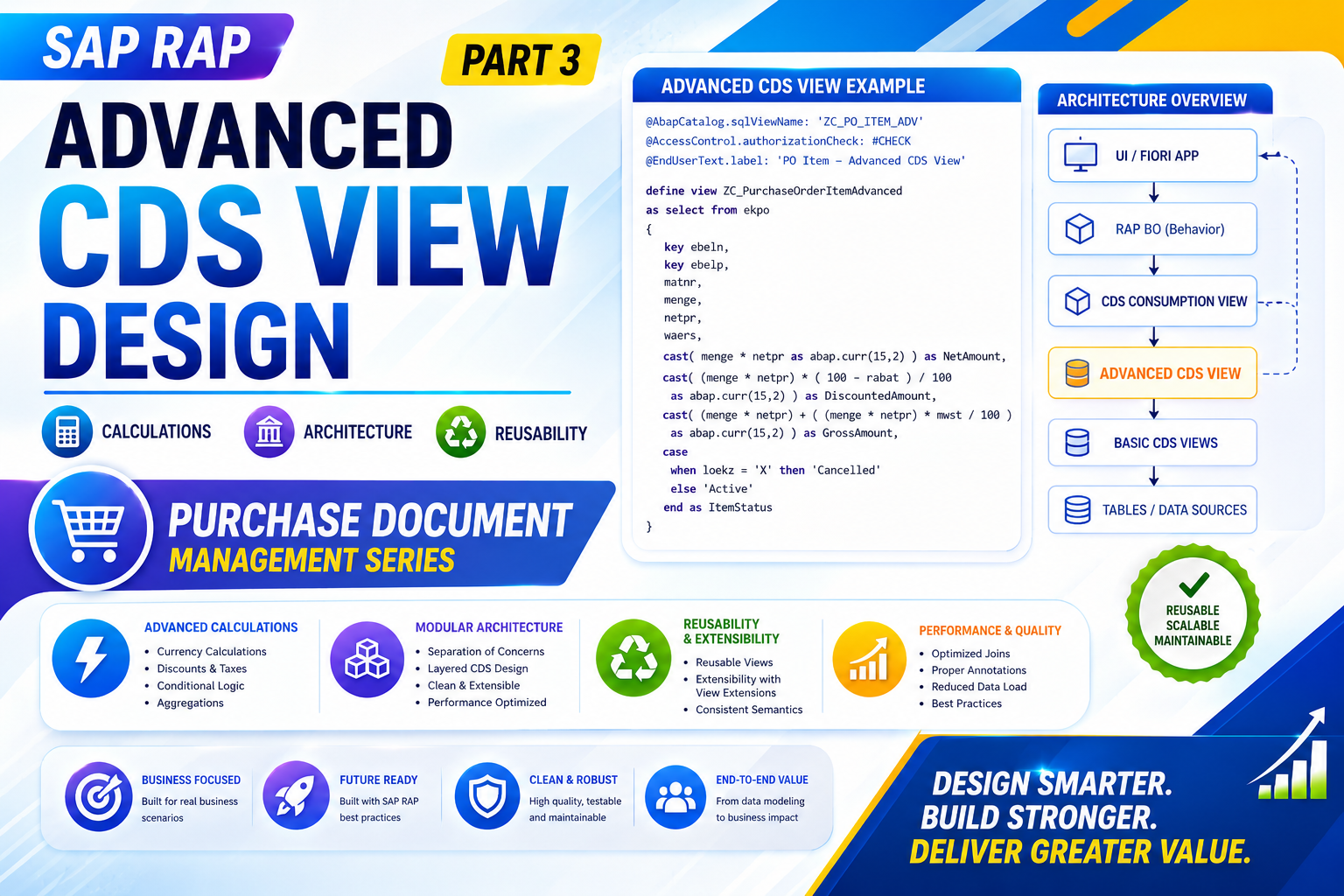
As enterprise applications evolve, the quality of their data model becomes one of the most critical factors influencing maintainability, scalability, and performance. In Part 3 of the SAP RAP Purchase Document Management Series, we shift our focus from testing and validation to the architectural principles that drive effective CDS View design. Core Data Services (CDS)
- June 1, 2026
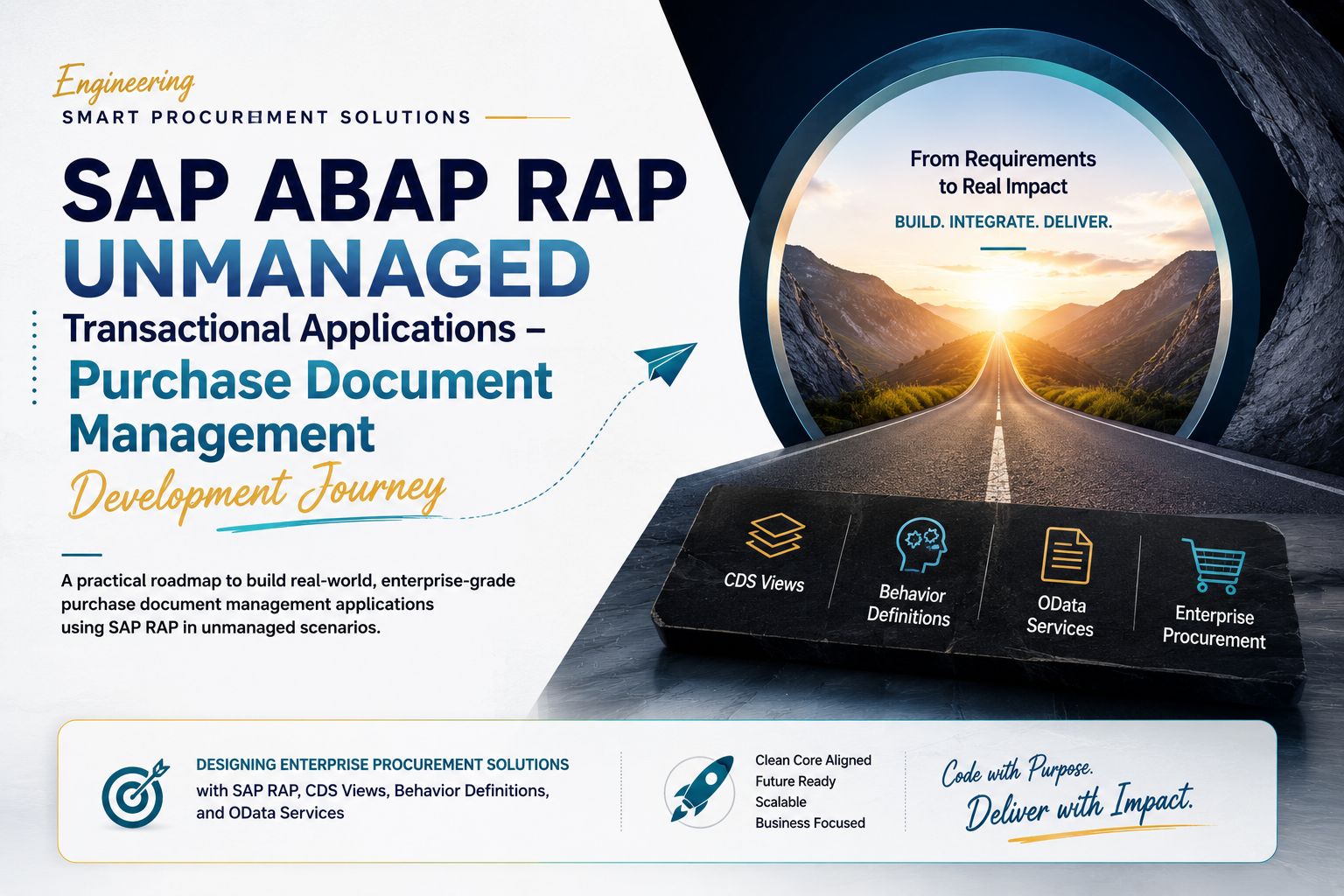
The SAP ABAP RESTful Application Programming Model (RAP) is transforming enterprise application development by providing a modern framework for creating scalable, maintainable, and cloud-ready business applications. While managed RAP scenarios automate much of the transactional processing, unmanaged RAP offers developers complete control over business logic, making it the preferred choice for integrating existing legacy applications