












 May 28, 2026
Inventory management plays a critical role in ensuring operational efficiency, reducing costs, and maintaining customer satisfaction. As businesses continue to embrace digital transformation, traditional inventory systems are no longer sufficient to meet the demands of modern enterprises. This is where SAP ABAP RESTful Application Programming Model (RAP) emerges as a powerful solution.
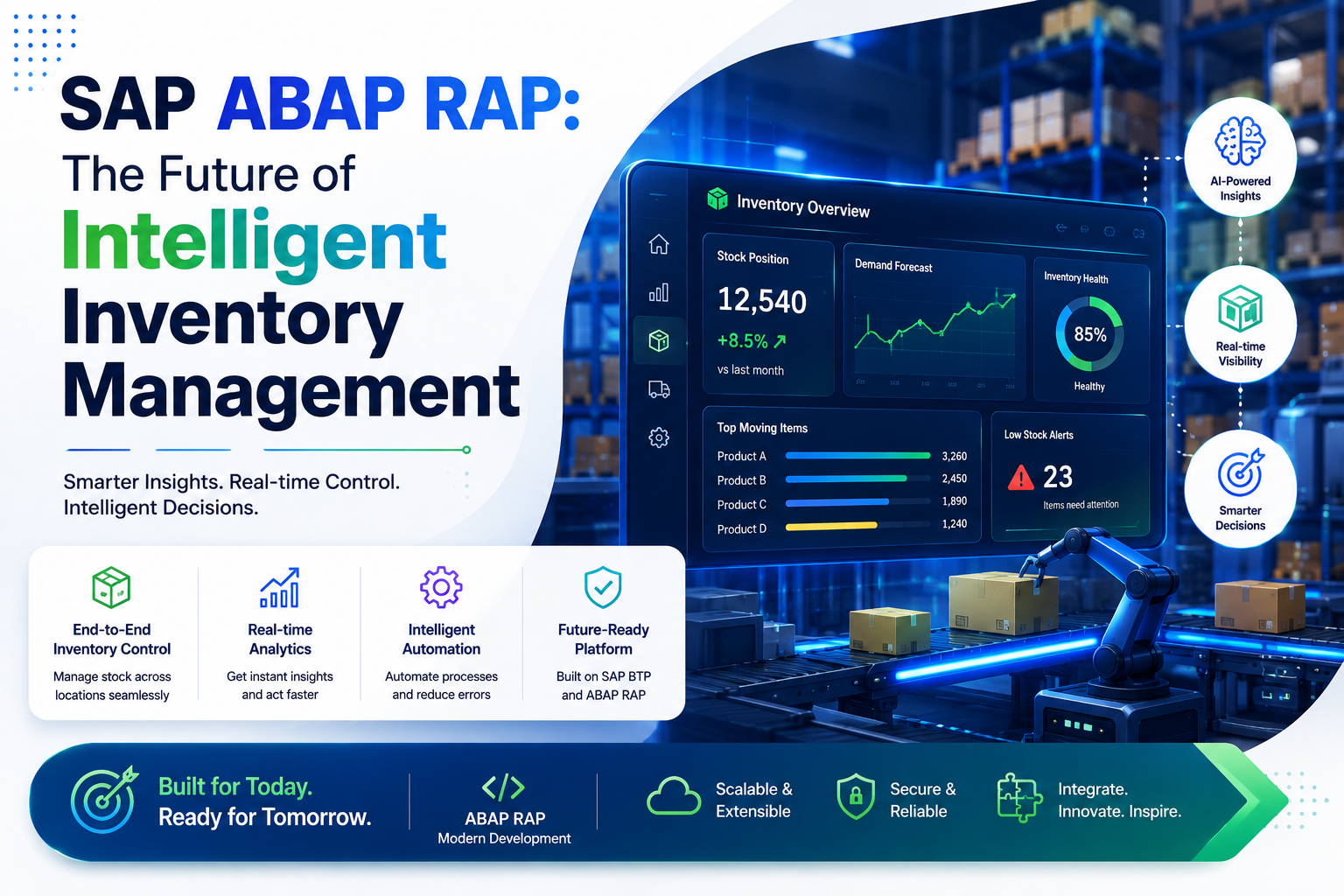
“Revolutionizing Inventory Management with SAP ABAP RAP” provides a comprehensive exploration of how SAP’s modern development framework can transform inventory operations. The guide demonstrates how RAP enables developers to build scalable, high-performance, and SAP HANA-optimized applications that streamline inventory processes and improve business visibility.
Beginning with database design and system setup, the guide walks through the complete development lifecycle, including data modeling, database population, service creation, and application implementation. Readers gain practical insights into leveraging RAP’s model-driven architecture to create efficient inventory management solutions that support real-time data processing and seamless integration with SAP Fiori applications.
Key Highlights:
• Introduction to SAP ABAP RESTful Application Programming Model (RAP)
• Designing robust inventory management data models
• Creating and populating database tables for inventory tracking
• Building scalable and maintainable RAP applications
• Exposing inventory data through OData services
• Integrating SAP Fiori user experiences
• Improving inventory visibility and operational efficiency
• Supporting real-time business decision-making
• Implementing modern SAP development best practices
Whether you are an SAP ABAP developer, SAP consultant, solution architect, or technology enthusiast, this guide provides valuable knowledge for building intelligent inventory management solutions that align with the future of enterprise application development.
Discover how SAP ABAP RAP is helping organizations move beyond traditional inventory systems and embrace a smarter, more agile approach to inventory management.




 Prev Post
What do you think?
Show comments / Leave a comment