












 June 8, 2026
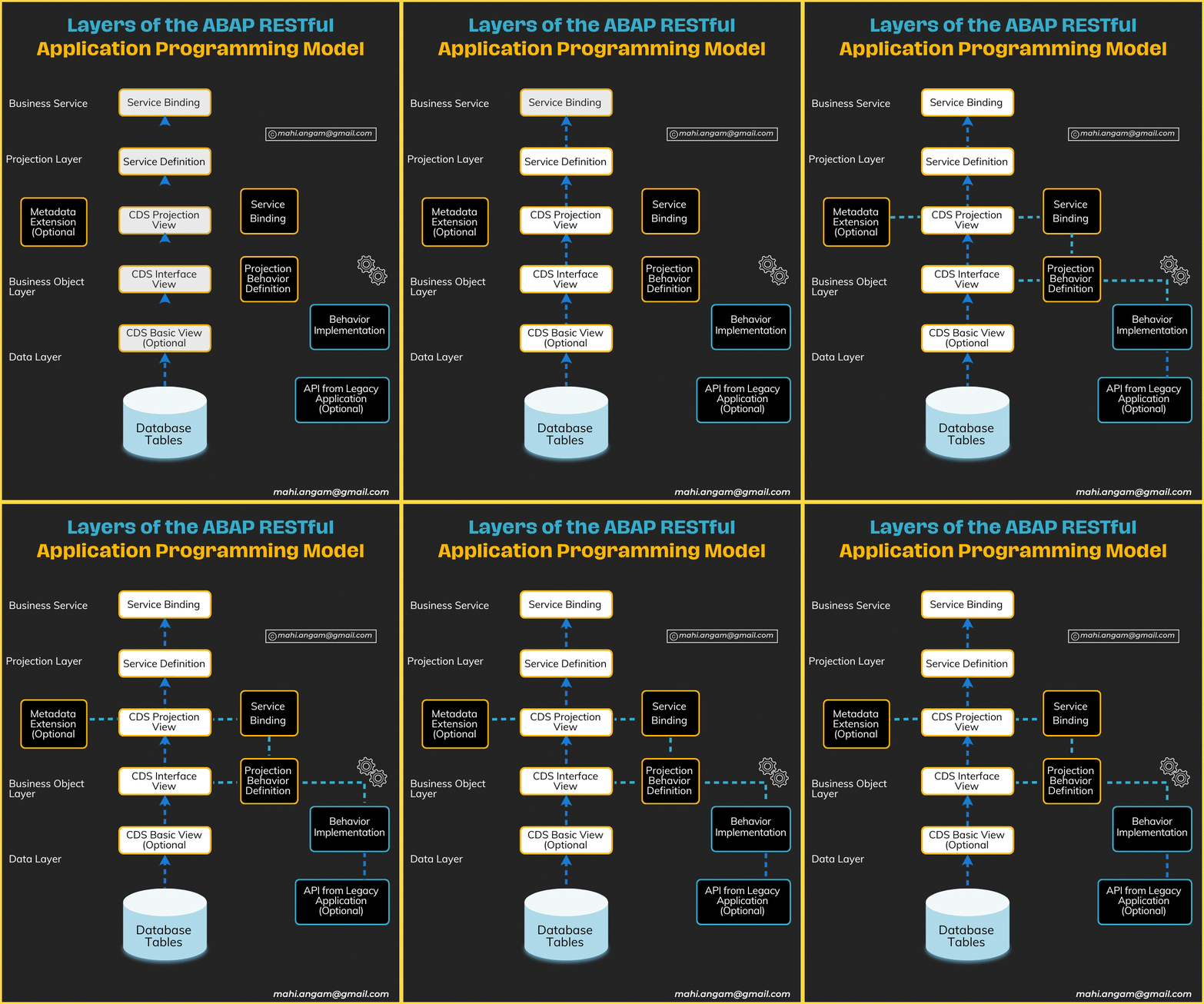
One of the greatest strengths of the ABAP RESTful Application Programming Model (RAP) is its clear and structured layered architecture. By separating responsibilities across multiple layers, RAP enables developers to build scalable, maintainable, and cloud-ready SAP applications.
Let’s explore the journey from data to service.
🔹 Data Layer
The foundation of every application begins with database tables that store business-critical information. This layer ensures data persistence and integrity.
🔹 Business Object Layer
Using Core Data Services (CDS Views), business data is modeled and organized to represent real-world business processes and entities.
🔹 Projection Layer
This layer acts as a controlled gateway, exposing only the required fields and operations to specific consumers while maintaining flexibility and security.
🔹 Metadata Extensions
Optional metadata extensions allow developers to enrich applications with UI annotations and presentation logic without modifying the core data model.
🔹 Business Service Layer
The final layer transforms business objects into consumable services through Service Definitions and Service Bindings.
🔹 Behavior Definitions
Business rules, validations, actions, determinations, and transactional processing are implemented here, ensuring consistent business behavior across applications.
🔹 Service Bindings
These bindings expose applications as OData services, making them accessible to SAP Fiori, external systems, and modern cloud applications.
The beauty of RAP lies in its separation of concerns. Each layer has a distinct responsibility, enabling developers to enhance, extend, and maintain applications with greater efficiency and less complexity.
Whether building cloud-native solutions in ABAP Cloud or modernizing existing SAP landscapes, RAP provides a future-ready framework for developing resilient and enterprise-grade business applications.
#SAPRAP #ABAPRESTfulModel #ABAPCloud #SAPDevelopment #CDSViews #SAPFiori #OData #BusinessObjects #EnterpriseArchitecture #CloudDevelopment #SAPTechnology #ProgrammingInsights #DataToService #SoftwareArchitecture #DigitalTransformation




 Prev Post
What do you think?
Show comments / Leave a comment