












 June 1, 2026
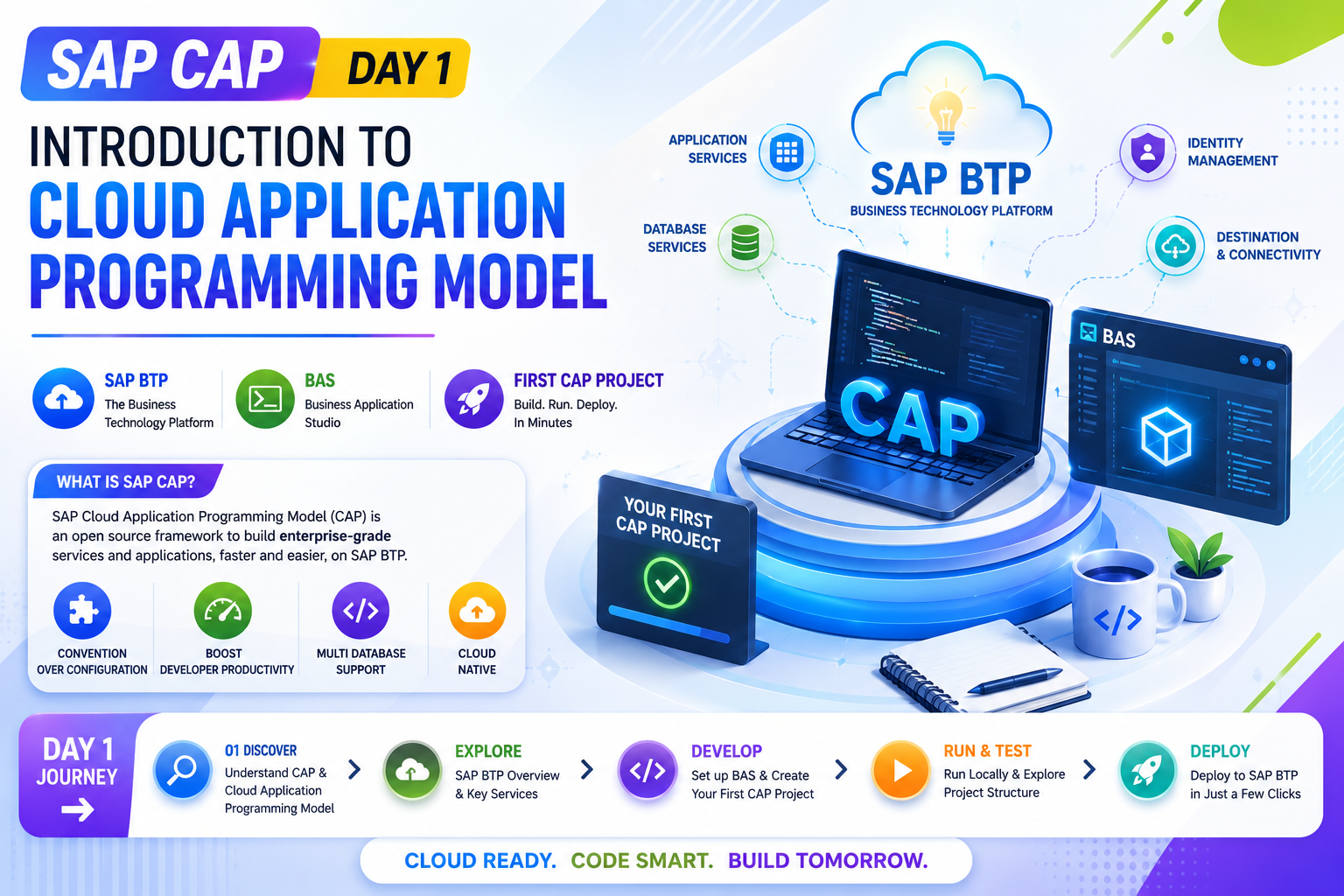
As SAP continues its transformation toward cloud-native development, developers are increasingly required to expand their skill sets beyond traditional ABAP programming. One of the most significant innovations in SAP’s cloud ecosystem is the SAP Cloud Application Programming Model (CAP), a powerful framework designed for building enterprise-grade cloud applications efficiently and rapidly.
In Day 1 of this learning journey, we begin exploring SAP CAP by setting up the required development environment and understanding the core concepts that make CAP one of SAP’s most strategic development models for the future.
This article walks through the complete onboarding process, including SAP Business Technology Platform (BTP) setup, SAP Business Application Studio (BAS) configuration, development space creation, and CAP project initialization. Through practical exercises, readers will gain hands-on experience creating their first CAP application while understanding the underlying architecture that powers cloud-native SAP solutions.
For ABAP developers, learning CAP is not simply about adopting a new framework—it’s about embracing a new way of thinking. CAP introduces modern development paradigms, leveraging technologies such as JavaScript, TypeScript, Node.js, and cloud-based services to build scalable and flexible applications.
One of the highlights of this article is a detailed comparison between SAP RAP and SAP CAP. While RAP remains the preferred framework for SAP S/4HANA-centric transactional applications, CAP offers unparalleled flexibility for cloud-first development scenarios. Understanding the strengths and use cases of both frameworks empowers developers to make informed architectural decisions based on business requirements.
As organizations accelerate their cloud adoption strategies, CAP skills are becoming increasingly valuable. This guide serves as the perfect starting point for developers looking to future-proof their careers and participate in the next generation of SAP application development.
Topics Covered
1. Introduction to SAP CAP
- What is SAP CAP?
- CAP Architecture Overview
- Core Principles of CAP Development
- Benefits of Cloud-Native Development
2. Understanding SAP BTP
- SAP Business Technology Platform Overview
- Trial and Free Tier Accounts
- Cloud Development Landscape
- Essential Services for CAP
3. Setting Up SAP Business Application Studio
- Creating a Development Space
- Configuring BAS
- Development Tools Overview
- Productivity Features
4. Creating Your First CAP Project
- Project Initialization
- CAP Project Templates
- Project Structure Overview
- Workspace Configuration
5. Defining Data Models
- CDS-Based Modeling
- Database Folder Structure
- Entity Creation
- Initial Data Definitions
6. CAP Development Lifecycle
- Design
- Build
- Test
- Deploy
7. Why ABAP Developers Should Learn CAP
- Future-Proofing SAP Skills
- Expanding Technical Expertise
- Cloud Development Opportunities
- Modern Development Practices
8. SAP RAP vs SAP CAP
- Development Languages
- Runtime Architecture
- Deployment Options
- Business Scenarios
- Integration Approaches
9. Cloud Development Best Practices
- Project Organization
- Naming Standards
- Development Workflow
- Scalability Considerations
10. Preparing for Future Learning
- CAP Services
- OData Exposure
- Fiori Integration
- Cloud Deployment
Key Takeaways
✔ Understand SAP CAP fundamentals
✔ Set up SAP BTP and BAS successfully
✔ Create your first CAP project
✔ Learn cloud-native development concepts
✔ Compare SAP RAP and SAP CAP architectures
✔ Begin your SAP cloud development journey
https://drive.google.com/file/d/1Qqmdf7w5qfUZv29q7QDMH-FhXfZ8N3lI/view?usp=sharing




 Prev Post
What do you think?
Show comments / Leave a comment