












 June 1, 2026
As our SAP RAP Purchase Document Management application continues to evolve, we now move beyond foundational CDS View architecture and focus on one of the most important aspects of enterprise application development: delivering business-ready data to end users.
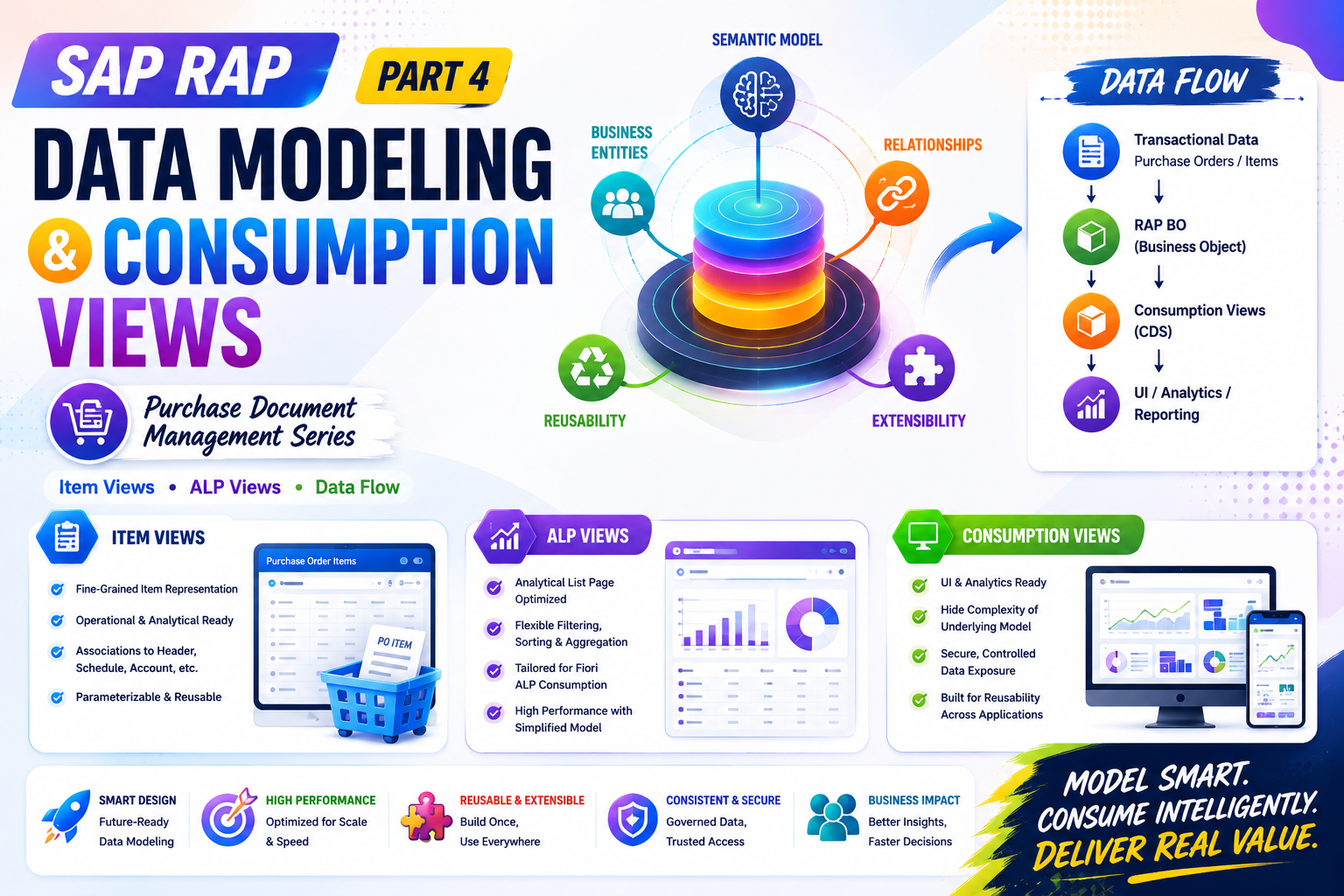
In Part 4 of this series, we explore how consumption views serve as the bridge between backend business logic and frontend user experiences. While interface and projection views establish the technical foundation of an application, consumption views transform business data into structures optimized for reporting, analytics, search capabilities, and SAP Fiori applications.
This chapter focuses on the implementation of key entities including Z_C_PurchaseDocumentItemLrp and Z_C_PurchaseDocumentALP, demonstrating how specialized CDS views support different application requirements while maintaining a clean and scalable architecture.
The Purchase Document Item consumption view is designed to provide detailed item-level insights, allowing users to analyze quantities, pricing information, material details, and procurement-related attributes efficiently. Through carefully structured associations and calculated fields, this view delivers meaningful business information while preserving optimal system performance.
We also introduce Analytical List Page (ALP) concepts through the implementation of Z_C_PurchaseDocumentALP. Analytical views play a crucial role in modern SAP applications by combining transactional processing with analytical capabilities. By exposing key metrics, aggregations, and business indicators, analytical consumption views empower users to make informed decisions directly within the application.
Beyond technical implementation, this article highlights the importance of data flow design within SAP RAP applications. Understanding how data moves from database tables through interface views, projection views, and finally consumption views is essential for building maintainable and scalable enterprise solutions.
Through practical examples and architectural insights, readers will gain a deeper understanding of how SAP RAP supports both operational transactions and analytical reporting while maintaining a unified development model.
This installment reinforces a key principle of modern SAP development: successful applications are built not only on strong business logic but also on the ability to deliver the right information to the right user at the right time.
Topics Covered
1. Understanding Data Flow in SAP RAP
- End-to-End RAP Architecture
- Data Movement Across CDS Layers
- Consumption Layer Responsibilities
- Enterprise Data Modeling Concepts
2. Consumption Views in RAP
- Purpose of Consumption Views
- Business-Oriented Data Exposure
- UI-Focused Modeling Strategies
- Reusability Benefits
3. Implementing Z_C_PurchaseDocumentItemLrp
- Item-Level Data Modeling
- Purchase Document Item Analysis
- Calculated Fields
- Associations and Relationships
4. Implementing Z_C_PurchaseDocumentALP
- Analytical List Page Architecture
- Business KPIs
- Aggregation Strategies
- Analytical Reporting Capabilities
5. Building Frontend-Ready Models
- SAP Fiori Consumption Patterns
- Search Optimization
- User Experience Considerations
- Responsive Data Structures
6. CDS View Design Best Practices
- Performance Optimization
- Layered View Architecture
- Naming Standards
- Maintainability Guidelines
7. Analytical Data Modeling
- KPI Exposure
- Aggregation Logic
- Business Insights Generation
- Decision Support Architecture
8. SAP RAP and Analytics Integration
- Transactional and Analytical Processing
- Embedded Analytics
- Future Extensibility
9. Performance Considerations
- Efficient Query Execution
- Optimized Associations
- Scalable CDS Designs
10. Lessons Learned
- Architectural Decisions
- Common Design Challenges
- Recommendations for RAP Developers
Key Takeaways
✔ Understand end-to-end RAP data flow
✔ Design effective consumption views
✔ Build frontend-ready CDS models
✔ Implement analytical list page architectures
✔ Deliver business-friendly reporting structures
✔ Create scalable and maintainable RAP applications
https://drive.google.com/file/d/17uwiJkeSGbMewAKDY8fxKe3cMiwn8bWk/view?usp=sharing




 Prev Post
What do you think?
Show comments / Leave a comment